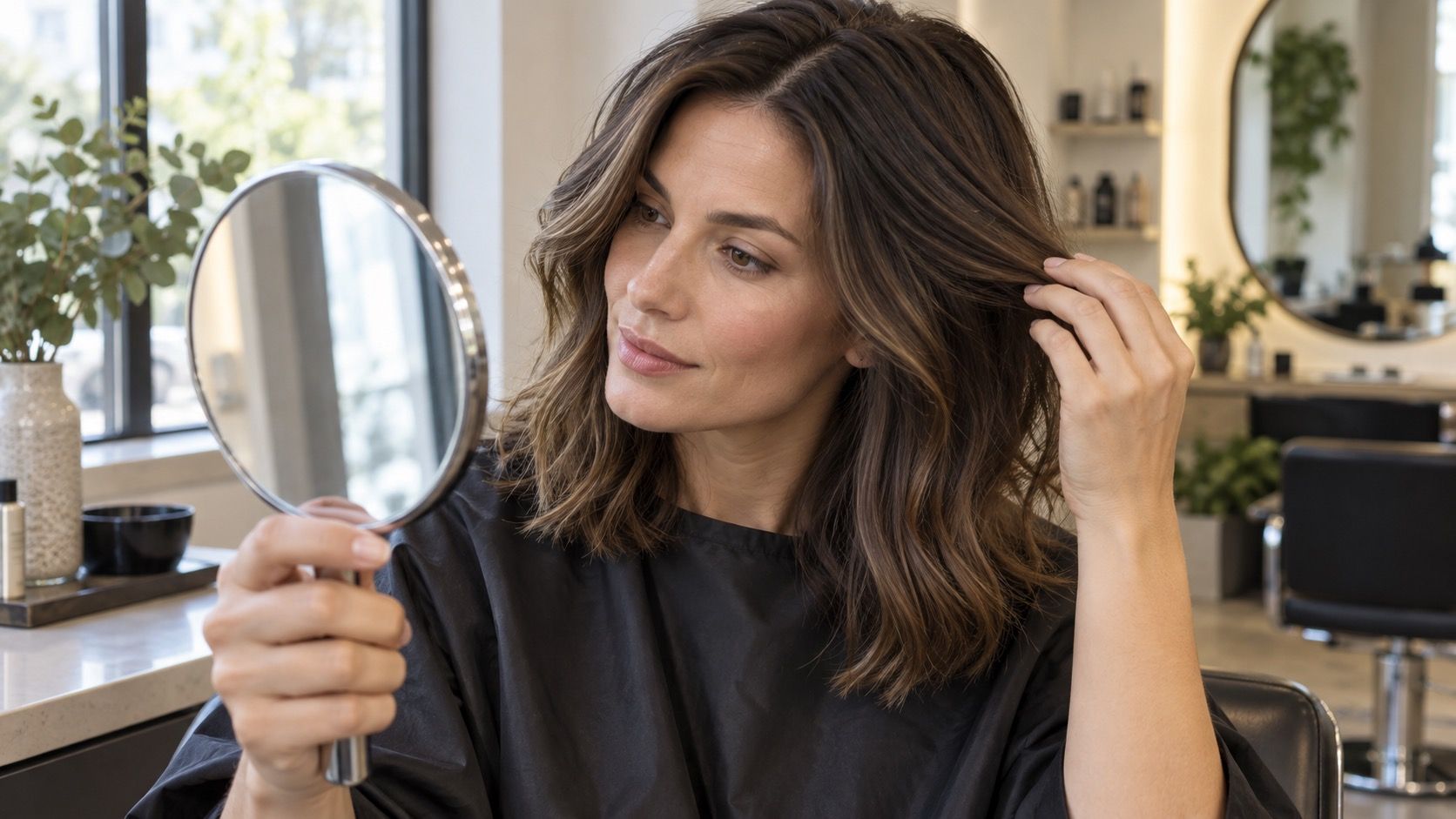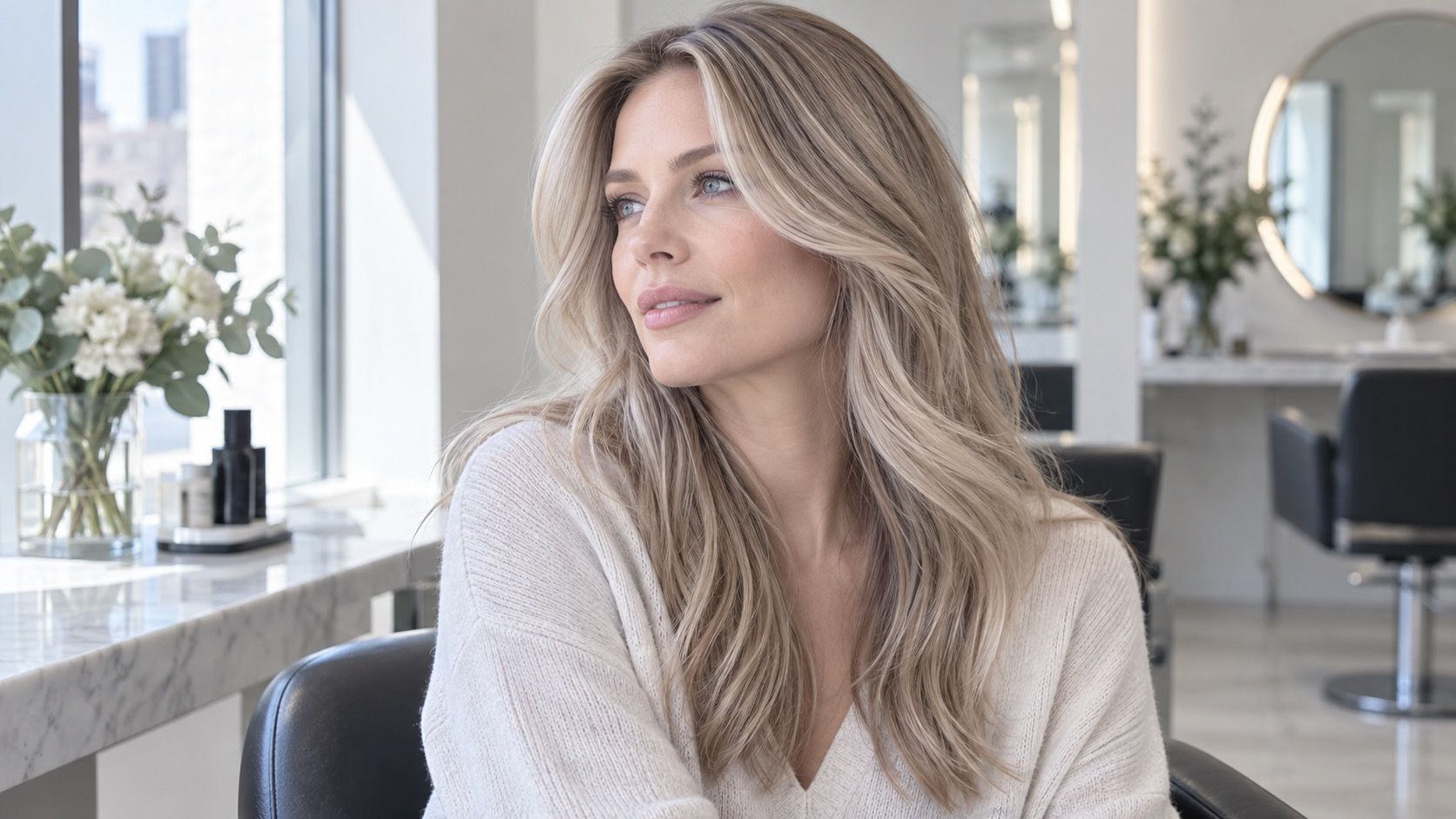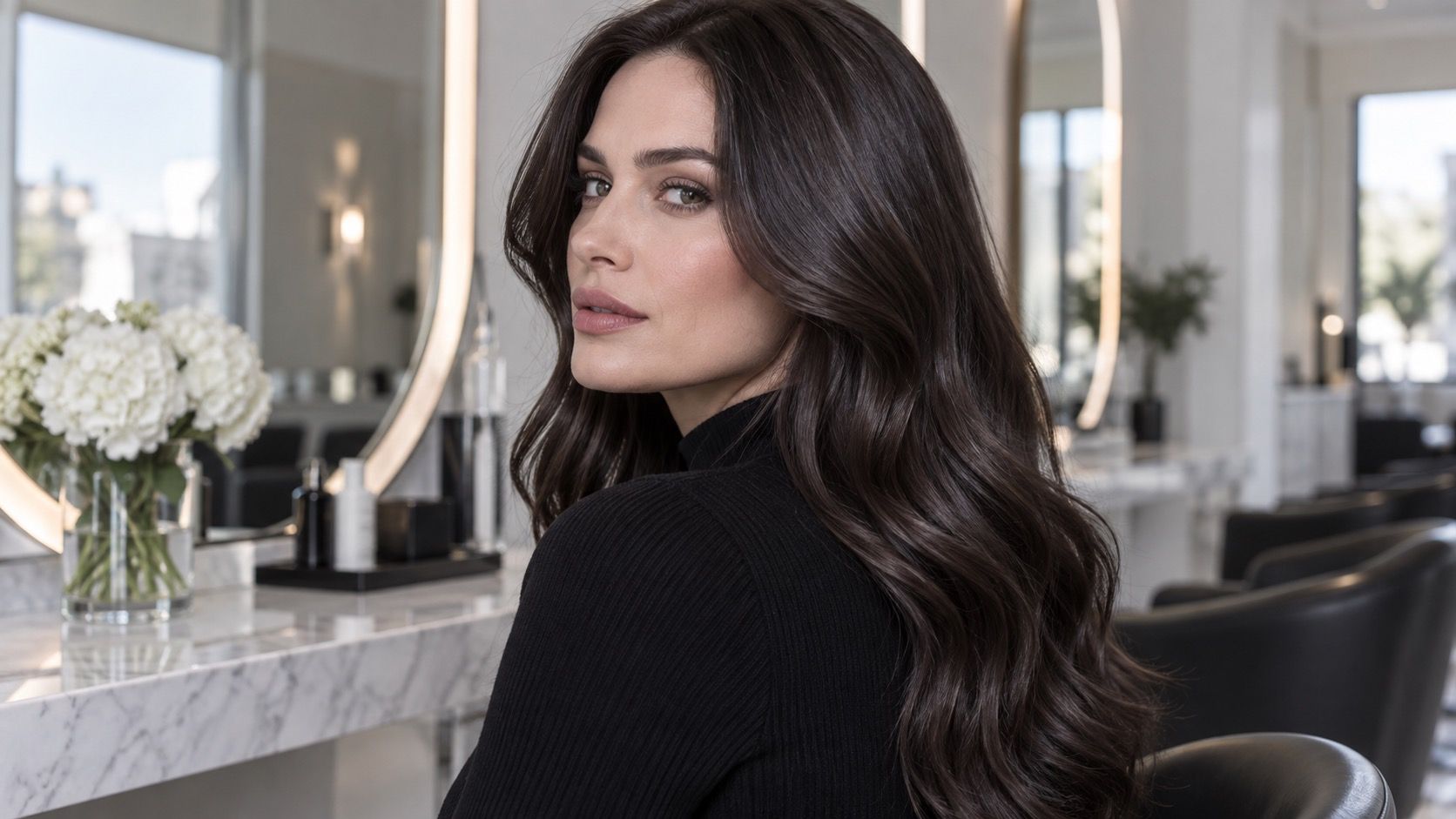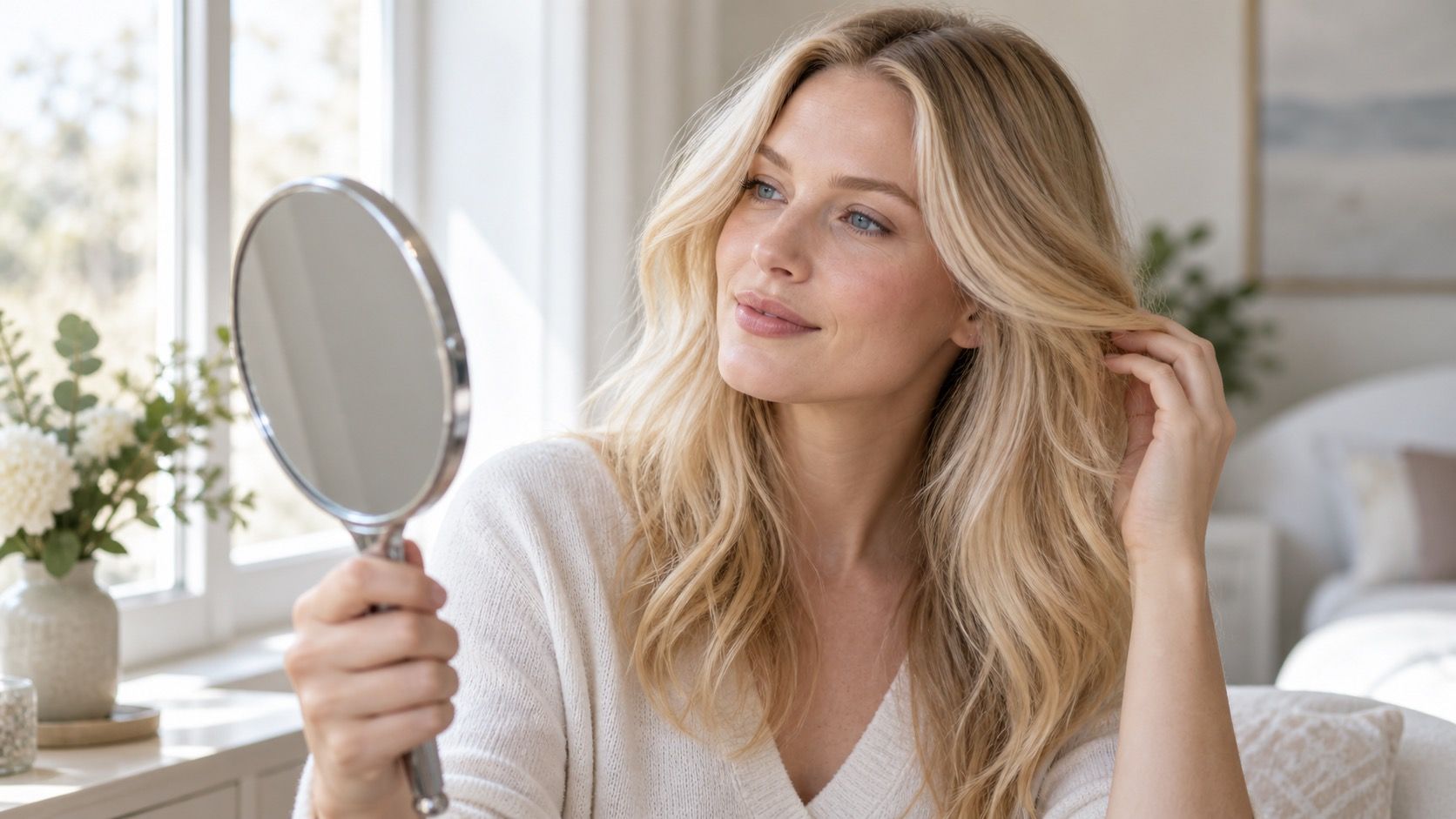
Blue eyes and fair skin are often treated as instructions to go lighter, blonder, and more golden. That can work, but it is not the only flattering route. The best hair color depends on whether the skin reads peachy, rosy, olive-neutral, or translucent in daylight; how dark the natural root and brows are; and how much contrast feels comfortable rather than overwhelming.
Start with undertone, not the color of your eyes
Blue eyes are noticeable, so it is tempting to build the entire choice around making them pop. In practice, the hair is much closer to the skin than the iris is. A shade that makes fair skin look sallow or flushed will not be rescued by bright eyes. Look at the jawline and neck in indirect daylight, without a self-tanner or heavily tinted base. Do you see a pink-blue cast, peach-gold warmth, a soft olive note, or something that shifts with the light?
A useful home comparison is fabric rather than a vein test. Hold a clear cool pink, blue-red, and silver-grey scarf below the face, then compare them with cream, warm coral, and soft gold. If the first group makes the skin look even, a cool or neutral blonde is a sensible starting point. If cream and coral make the face look alive, a golden beige or strawberry direction may be easier. If both groups work but neither is perfect, neutral beige is often safer than choosing a side too aggressively.
Hair color analysis can narrow choices, but it should not erase evidence from your own mirror. Freckles, redness, and under-eye shadows can make an undertone look different from one room to another. Take a few photos beside a north-facing window and revisit them a day later. That pause is more useful than deciding from a salon ring light, which can make nearly every blonde look cooler and smoother than it will at home.
Blonde shades that add definition instead of washing out the face
Beige blonde is the broadest, most forgiving option for blonde hair, blue eyes, and fair skin. It sits between obvious gold and obvious ash, so it can support both a cooler rosy complexion and a slightly warm peach one. The best version has a little shadow at the root and a mix of fine, light pieces through the lengths. It looks less like a single blanket of color and more like hair that catches light naturally.
Ash blonde is useful when the skin leans rosy, neutral-cool, or easily looks yellow beside warm colors. It can emphasize blue eyes by creating a clean, quiet frame. But ash is not automatically sophisticated. On very porous hair, repeated violet or blue toner can turn the ends smoky grey while the root remains yellow. Ask for a soft ash-beige finish rather than a flat silver result unless you are prepared for regular toning and a very deliberate makeup and wardrobe contrast.
Pearl and icy blonde suit people whose natural root and brows already create enough depth. They need even lifting and healthy lengths, because any brassy patch becomes conspicuous against such a pale finish. For someone with pale brows and very fair skin, an icy all-over blonde may reduce definition. Leaving a cool, diffused root or keeping a few deeper lowlights near the crown usually makes the result more wearable.
| Shade direction | Often useful when | Practical caution |
|---|---|---|
| Neutral beige blonde | Undertone is mixed or difficult to read | Too much gold can appear after several washes |
| Soft ash blonde | Skin is rosy or cool-neutral | Porous ends may absorb toner unevenly |
| Pearl blonde | You want lightness with a cool reflective finish | Requires a clean, even lift underneath |
| Golden beige blonde | Skin reads peachy and natural warmth is visible | Keep the gold soft, not orange or yellow |
| Strawberry blonde | Warmth suits the skin and freckles | Red pigment fades faster than neutral blonde |
When a warmer blonde or strawberry tone is the better answer
Warm blonde works beautifully when the warmth is in the skin rather than imposed on it. A light peach complexion, golden freckles, and naturally honey-toned roots can all support wheat, soft gold, or strawberry blonde. These shades do not have to be bright yellow. A warm blonde that looks expensive usually has variation: a neutral base, honey ribbons, and slightly lighter pieces around the face rather than one solid brassy level.
Strawberry blonde is worth considering for fair skin because it can give definition without the visual weight of dark brown. The key is choosing the depth. A pale copper-blonde can read fresh on someone with warm, clear skin; a deeper rose-gold or muted ginger can work when the brows and roots are stronger. If the skin is cool-pink, however, orange-forward strawberry blonde may exaggerate redness. A softer rose or neutral copper gloss is a lower-risk first experiment.
Do not judge warm blonde only against a white salon cape. Put on the colors you actually wear. People searching for the best clothing colors for blonde hair, blue eyes fair skin often discover that the same shade behaves differently with navy, black, ivory, denim, and coral. If a new honey blonde looks lovely only with cream and makeup but fades your face in a navy sweater, it may be warmer or lighter than your everyday contrast can support.
When ash, beige, or a darker root makes more sense
Ash blonde is most useful as a direction, not a dare. It can neutralize obvious orange or yellow from previous lightening and give blue eyes a crisp frame. Yet a full head of dark ash can make fine hair look thinner because it reflects less warm light. Often the better choice is a neutral root smudge with beige-ash highlights, leaving enough brightness around the face to keep the result open.
Natural root is an honest guide to maintenance. If a medium or dark blonde root appears quickly, a bright platinum finish will ask for regular retouching and may create a sharp band against fair skin. A lived-in root lets the regrowth look designed instead of neglected. Tell the colorist the level of your natural root and how often you can realistically sit for a service. A pretty swatch that needs four-week appointments is not necessarily the best hair color for your life.
Cooler blondes also benefit from clarity in clothing. Navy, cobalt, charcoal, berry, and crisp white can make ash and pearl tones look intentional. If you prefer camel, rust, olive, and soft warm beige, a neutral or warmer blonde may integrate more easily. This is not a rule about what you are allowed to wear; it is a way to check whether the new shade will feel connected to the things already in your wardrobe.
Use brows and roots to set the right level of contrast
Brows are the small feature that changes the entire reading of blonde hair. Dark brows with pale blonde hair can be striking, especially with blue eyes, but the contrast needs to appear deliberate. Very light brows with very light hair can be airy and soft, though they may need a little definition in photographs or evening light. Neither option is wrong. The trouble starts when the hair is lifted dramatically but the brows, root, and makeup are left to tell three different stories.
Before lightening, look at old photos from childhood or periods when your hair was closest to its natural color. Notice whether the face looked better with a visible root and brow frame or with softer, low-contrast color. If you decide to go two or three levels lighter, consider leaving shadow at the scalp and keeping fine lowlights at the temples. This creates a bridge between hair and brows without requiring you to change the brows every time the toner fades.
For a darker experiment, a mushroom blonde, dark beige, or cool bronde can make blue eyes look unexpectedly clear while adding contour around fair skin. It is a useful option for people tired of bleaching but afraid of brown hair. Ask for lowlights first rather than a full permanent color. They reveal whether deeper contrast feels elegant before you take on the removal process later.
Test a change in the least permanent way first
Bring reference images with similar starting depth and texture, not just a celebrity color photographed under studio lighting. Show one image of the tone you want in daylight and another that demonstrates how light or dark you want the overall result to be. Then identify the problem you are avoiding: yellow brassiness, orange copper, grey ends, a flat all-over blonde, or an overly dark root. A colorist can translate a clear problem into a formula more accurately than a vague request for a glow-up.
Glosses, lowlights, and face-framing pieces are useful tests because they change direction without demanding a full correction later. A neutral beige gloss can show whether less yellow is enough. A few strawberry ribbons can reveal whether warmth supports your skin. A cool root melt can test higher contrast. Live with the result for two weeks, including a workday, a bare-faced morning, and an evening out; different lighting will expose the parts that a first salon photo hides.
Keep the condition of the hair in the decision. Bleached lengths hold toner unpredictably, and dry ends can make even a carefully chosen blonde look dull. Regular trims, heat protection, and a routine suited to your scalp and texture help the color stay readable. The best choice is not the one that makes blue eyes look brightest for one picture. It is the shade that still looks balanced when the root grows in, the toner softens, and you are wearing an ordinary sweater on an ordinary Tuesday.