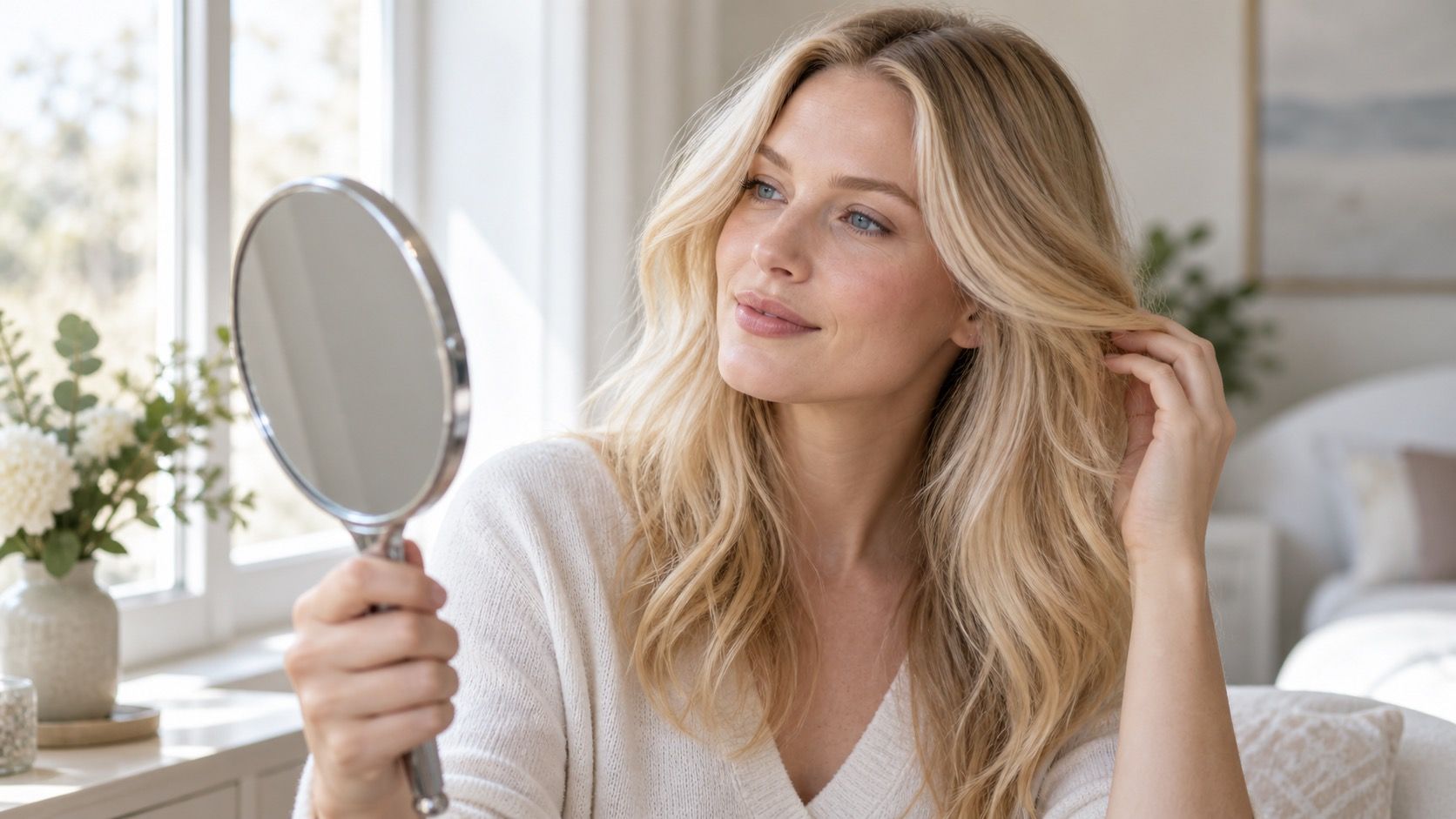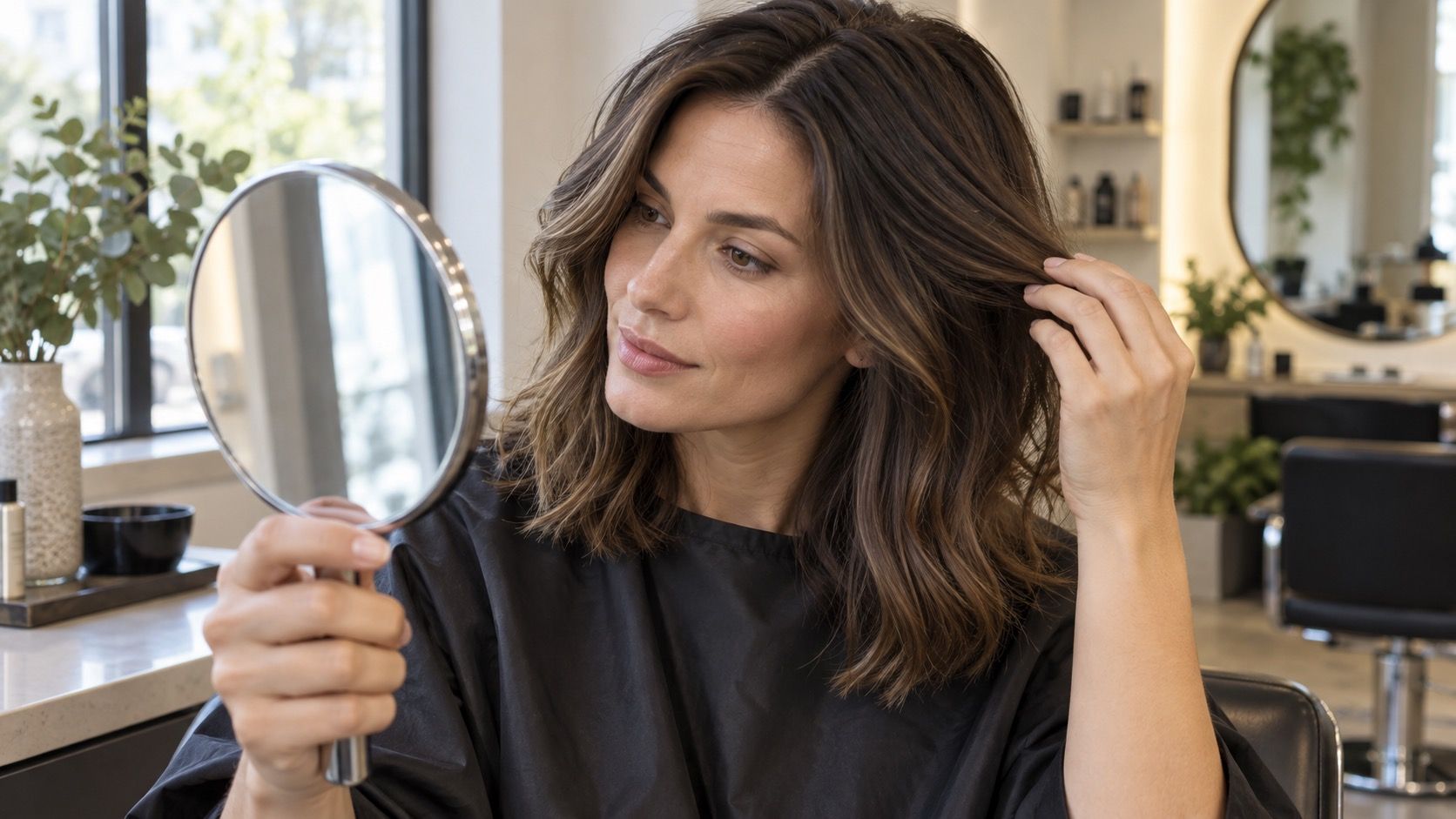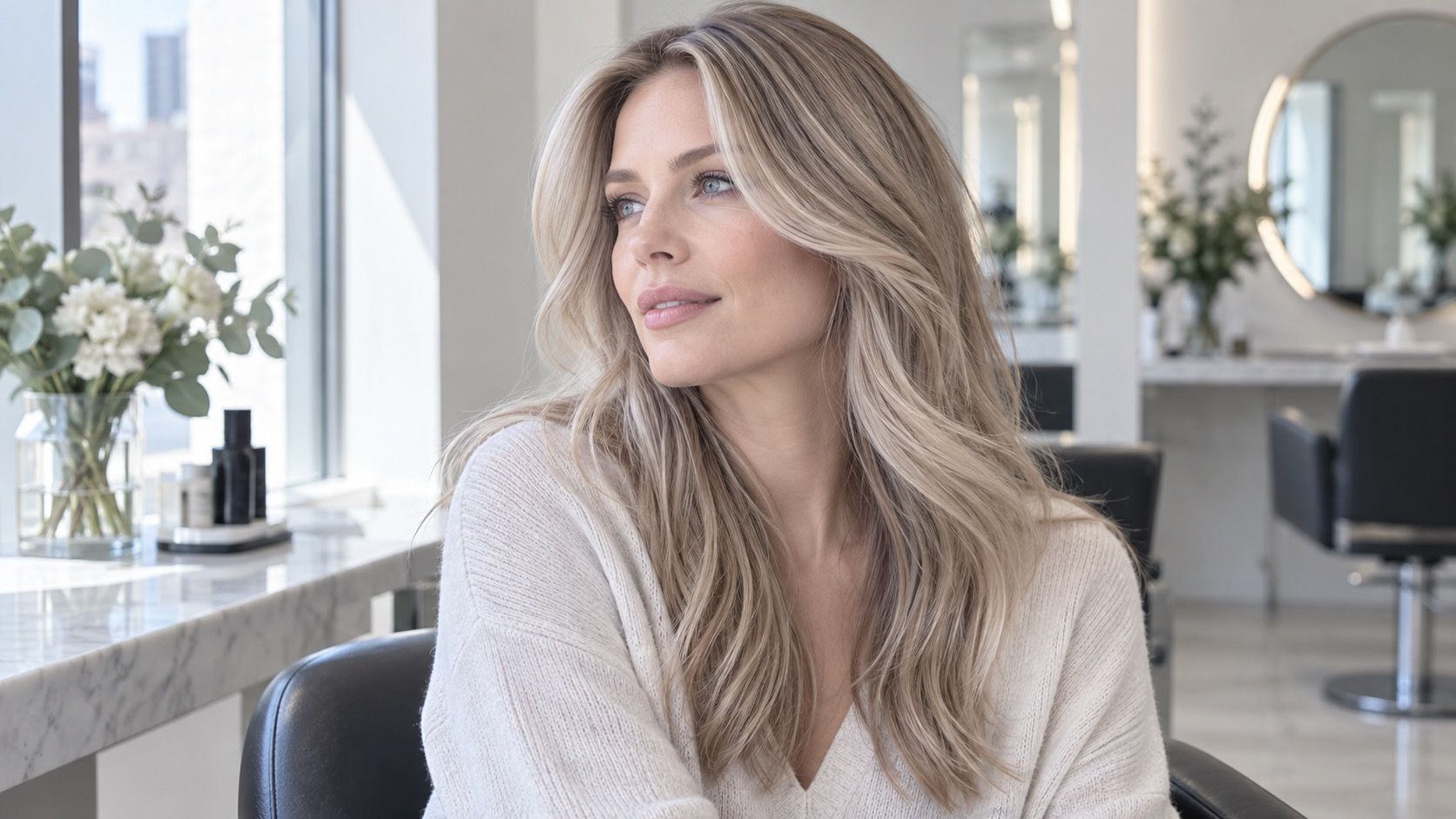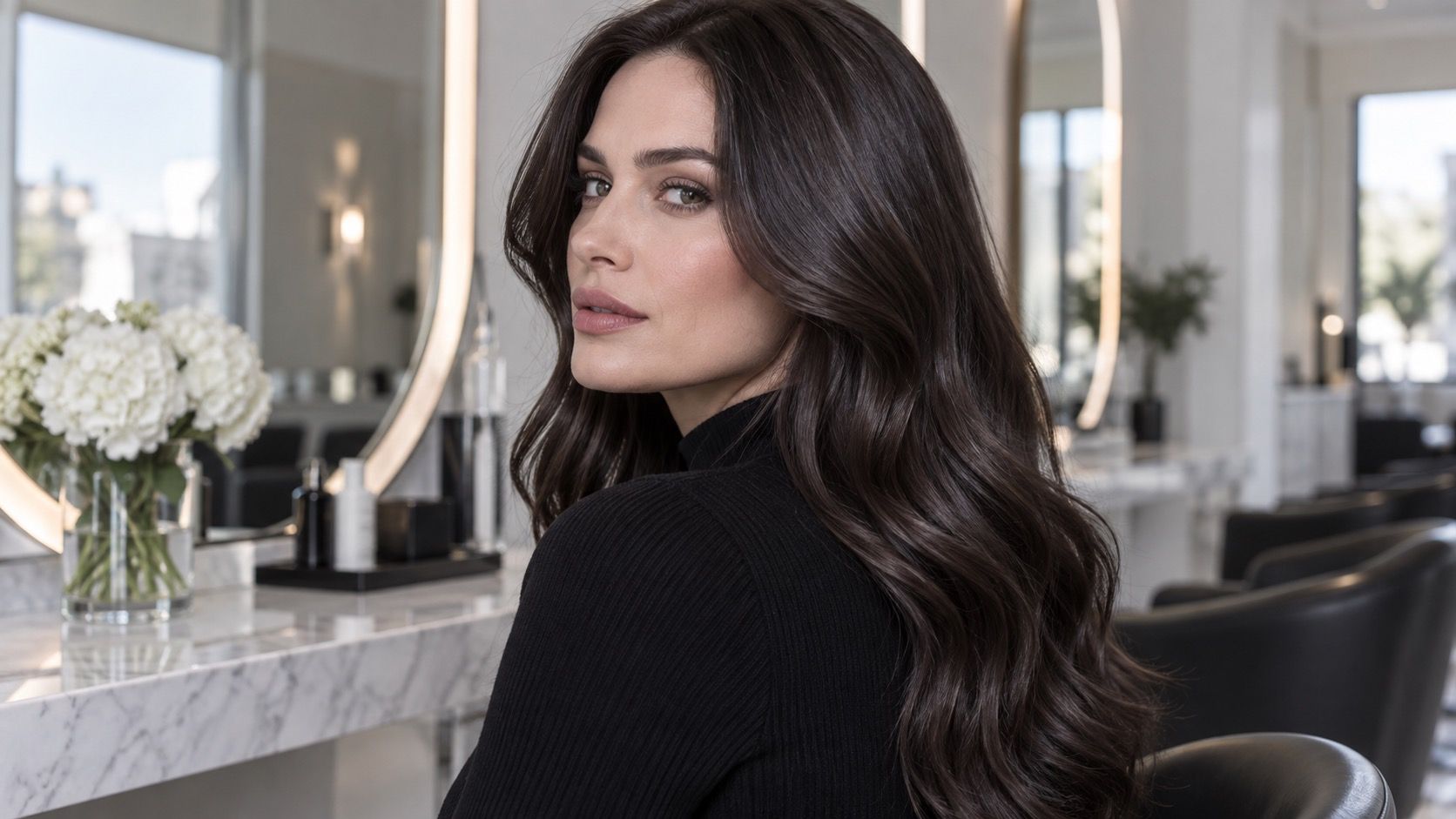
Cool Winter hair color is less about finding the darkest possible shade and more about keeping the color clear. The most convincing choices tend to have a blue, violet, neutral-cool, or silvery direction, plus enough depth to frame the face. A dramatic change can look polished rather than severe when the root, brows, and shine are planned together.
The contrast question comes before the shade name
Seasonal color labels are useful shorthand, not a laboratory result. Still, people who identify with Cool Winter often notice the same problem: a soft, warm, low-contrast hair color makes their eyes and features look less defined. Their natural coloring may already have visible contrast between hair, skin, brows, and eyes. In that setting, a cool brunette, deep black, or sharply toned blonde can feel more coherent than a beige-gold compromise.
Start with photographs taken beside a window, without a filter and with the hair pulled away from the face. Compare a deep charcoal top with a camel or mustard one. If the cooler, clearer fabric makes the face look brighter while the warmer fabric seems to add yellow or shadow, that is a practical clue. It does not dictate one hair dye formula, but it can keep a salon consultation from drifting toward the default warm balayage.
Contrast has two parts. Value contrast is the light-dark difference between skin and hair; color contrast is the cleanness of the hue. A pale person can still suit a dark blue-black bob if their brows, eyes, and clothing choices support it. Conversely, someone with naturally dark hair may need only a cooler gloss rather than a jump to inky black. The goal is definition, not costume drama.
Dark shades with dimension instead of flat black
For many Cool Winters, the easiest strong option is a cool brunette. Think espresso, dark cocoa without red, smoky brown, or near-black brown with a blue-violet cast under daylight. These colors preserve depth without the hard edge that a solid drugstore black can create. Ask for a tonal result rather than a single opaque block, especially if the hair has old warm highlights that can flash copper around the ears and nape.
A salon formula may use ash, blue, or violet correctors, but the important visible test is simpler: does the brown read rich and cool in daylight, not greenish, reddish, or dusty? A good cool brunette still reflects light. If it absorbs every highlight and turns the lengths into a matte curtain, it may be too dense for the cut and texture. Fine hair often benefits from a slightly lighter cool ribbon near the front rather than more darkness all over.
Blue-black is striking when it is maintained intentionally. It works best with clear brows and a haircut that shows movement, because the color makes uneven fading and dry ends obvious. Before committing, test a blue-black gloss or a demi-permanent shade. It fades more softly than permanent black and reveals whether the stronger root contrast feels elegant in daily lighting, not just under salon lamps.
| Direction | What it can solve | Watch for |
|---|---|---|
| Smoky espresso | Depth with a softer outline than black | Red warmth returning through porous ends |
| Cool dark chocolate | A natural-looking brunette with shine | Gold or copper face-framing pieces |
| Blue-black gloss | Maximum contrast and clean visual impact | Fast fade on sun-exposed or heat-styled hair |
| Soft black with violet cast | Darkness that stays dimensional in daylight | Over-toning can make very light skin look drained |
Light shades need crisp tone, not endless ash
Icy blonde is often named as a Cool Winter option, but the name can mislead. It is not simply bleach plus as much purple shampoo as possible. An effective icy or pearl blonde has enough even lift to look light and reflective, then enough controlled cool tone to cancel yellow without turning grey, lavender, or fragile-looking. Uneven lightening is especially visible beside high-contrast features.
A cool beige blonde can be easier to live with than silver-white hair. It keeps a faint neutral shadow at the root and a clean pearl or champagne finish through the mid-lengths. The word champagne can be risky here: some versions are golden. Ask to see a strand swatch in daylight and explain that you want neutral-cool beige, not honey. The distinction seems small in a formula book and obvious once the hair is against the face.
If the natural base is dark, do not expect a single appointment to create healthy icy blonde. Lift in stages, trim compromised ends, and use a bond-supporting routine if it suits the hair. A deliberate dark root can make the transition more wearable and add contrast, but it should be cool or neutral. A warm shadow root above silver lengths produces the very banded effect most people are trying to avoid.
Berry, plum, and red tones without muddy warmth
Cool Winter hair colors do not need to stay brown, black, or blonde. Berry tones can be particularly useful because they add color while retaining depth. Black cherry, cranberry, cool burgundy, plum, and blue-based wine shades usually sit better than copper auburn or tomato red. The difference is not merely style language: orange or golden pigment next to the face can dominate a cool complexion, while a blue-red usually reads cleaner.
Look at the color outdoors and near a warm bathroom mirror before deciding. Some burgundies are cool in a salon but reveal a mahogany or copper base in sunlight. A colorist can often build a deeper violet-red glaze over a brunette base instead of lifting the hair aggressively. That route gives a more believable result and makes fading less alarming, because the underlying brown remains compatible with the final tone.
Vivid berry shades are maintenance colors. Wash in cool-to-lukewarm water, reduce high-heat styling, and use color-safe products appropriate for the scalp and texture. A gloss appointment every few weeks can be kinder than repeatedly putting permanent dye over the same lengths. When a berry color fades, it should fade toward a cool brown or pinkish veil, not leave a bright orange band at the hairline.
Use roots, brows, and shine as part of the color decision
Hair is seen as a frame, not as a detached swatch. Natural root depth tells you how much contrast the face already carries. If dark roots appear within two weeks and the brows are medium to deep, a very pale blonde may require constant work to look intentional. A cool root melt, pearl highlights, and a brighter money piece can create the same clarity with fewer emergency toner appointments.
Brow depth matters too. Bleaching hair several levels lighter while leaving almost-black brows can look graphic and modern, but it should be a chosen contrast. If the brows are naturally pale, a darker cool hair color may need a subtle brow tint or simply more defined makeup to avoid making the face disappear. Do not tint brows to match a hair dye exactly; hair color changes under light and fades much faster than brow pigment.
Shine is the overlooked variable. Cool colors often look expensive when the surface is smooth enough to reflect blue-white daylight, and dull when the cuticle is rough. A clear gloss, regular trims, and a heat protectant can do more for a smoky brunette than another box of ash dye. If the lengths are porous, address that first; otherwise every toner will grab differently and the result will look patchy.
Plan a dramatic change in stages
Bring reference images that show hair in ordinary daylight, not only polished studio shots. Choose two that show the target depth and two that show the exact coolness you like. Then say what you do not want: copper flare, golden highlights, flat matte black, or a grey cast. This language gives a colorist usable guardrails without pretending that one seasonal category can predict a precise formula.
For a large shift, start with a gloss, lowlights, or face-framing pieces. A cool-toned demi-permanent service lets you see how the direction behaves with your skin, wardrobe, and makeup before you remove pigment or commit to black. Photograph the hair in the morning, at dusk, and under office lighting. If it only looks good in one setting, the issue may be the tone level rather than the whole idea.
Maintenance should be part of the decision, not an afterthought. Deep brunette needs anti-brass care and occasional glossing; icy blonde needs careful lifting, toning, and repair; berry shades need frequent refreshes. The best Cool Winter hair color is the one that remains clear after three weeks, still works with your natural root, and does not demand a new identity every time the bathroom light changes.