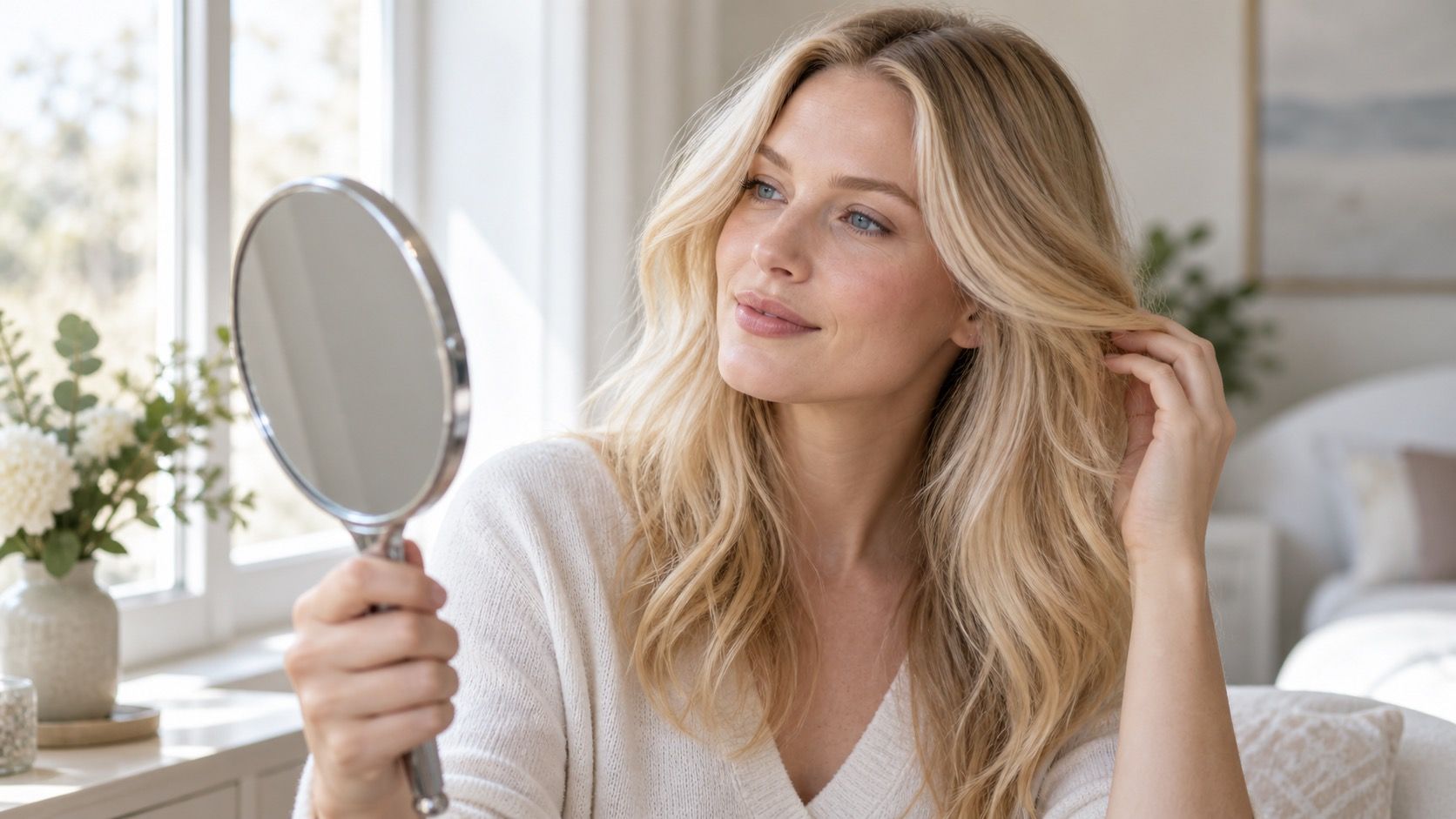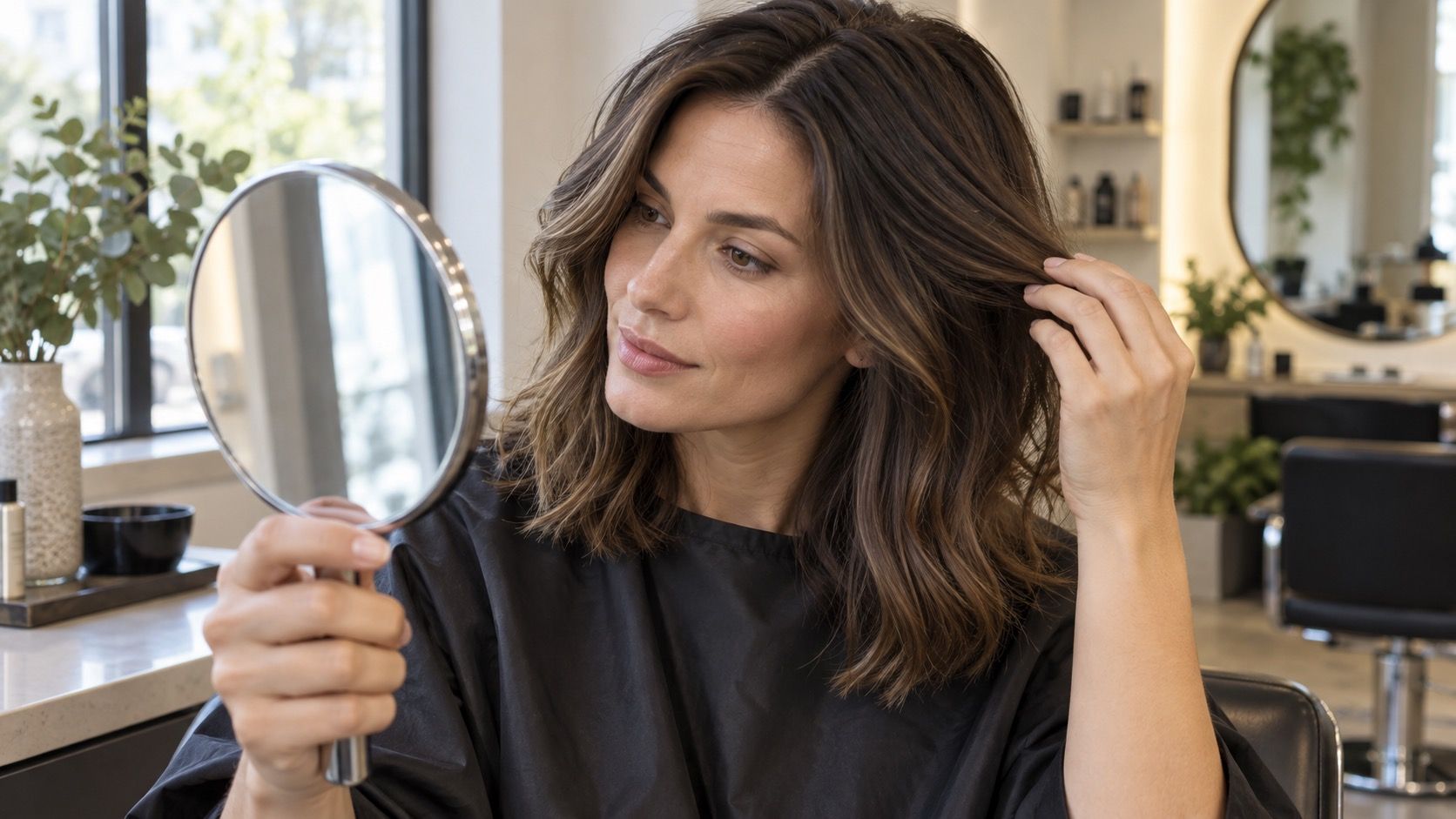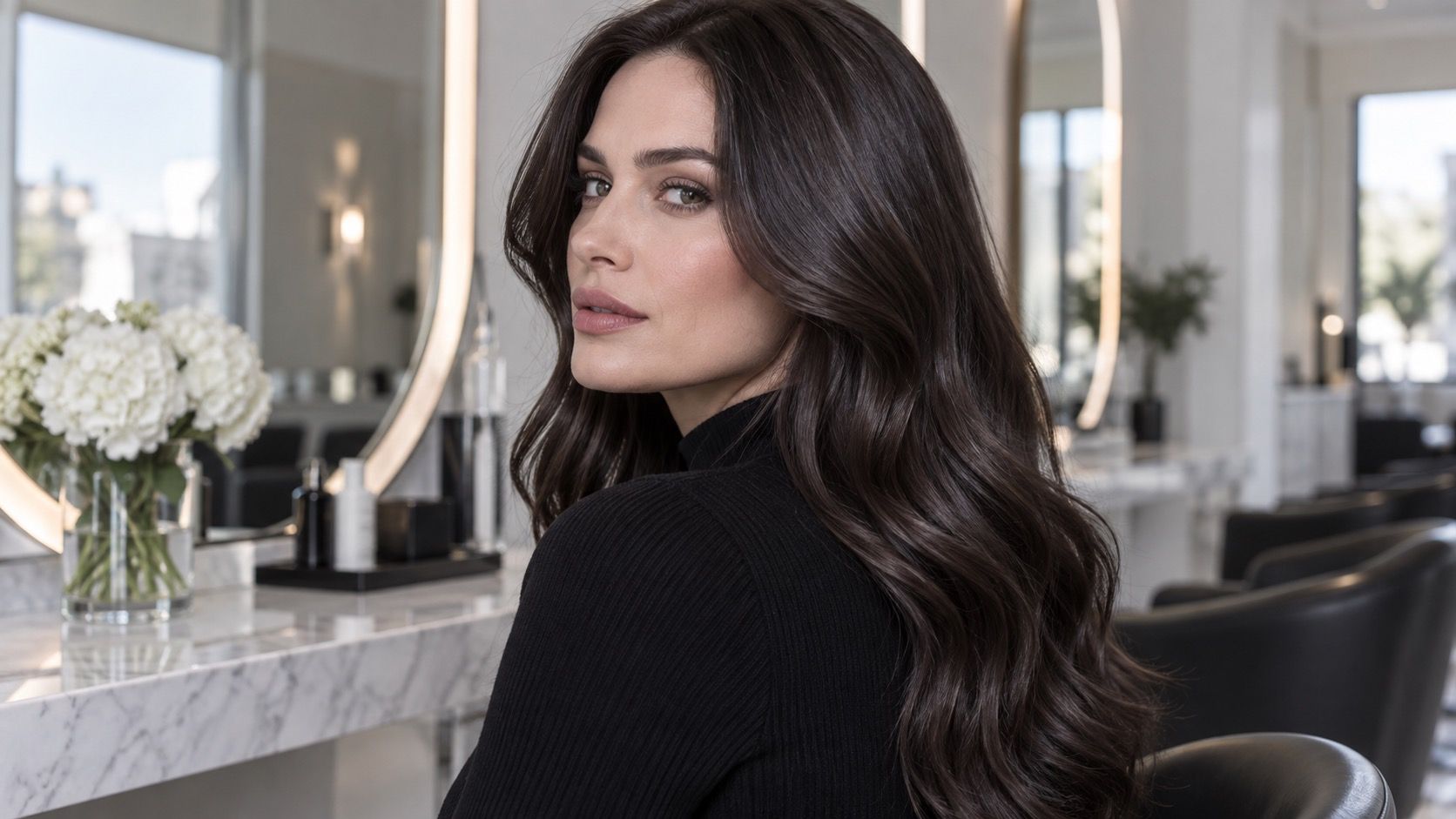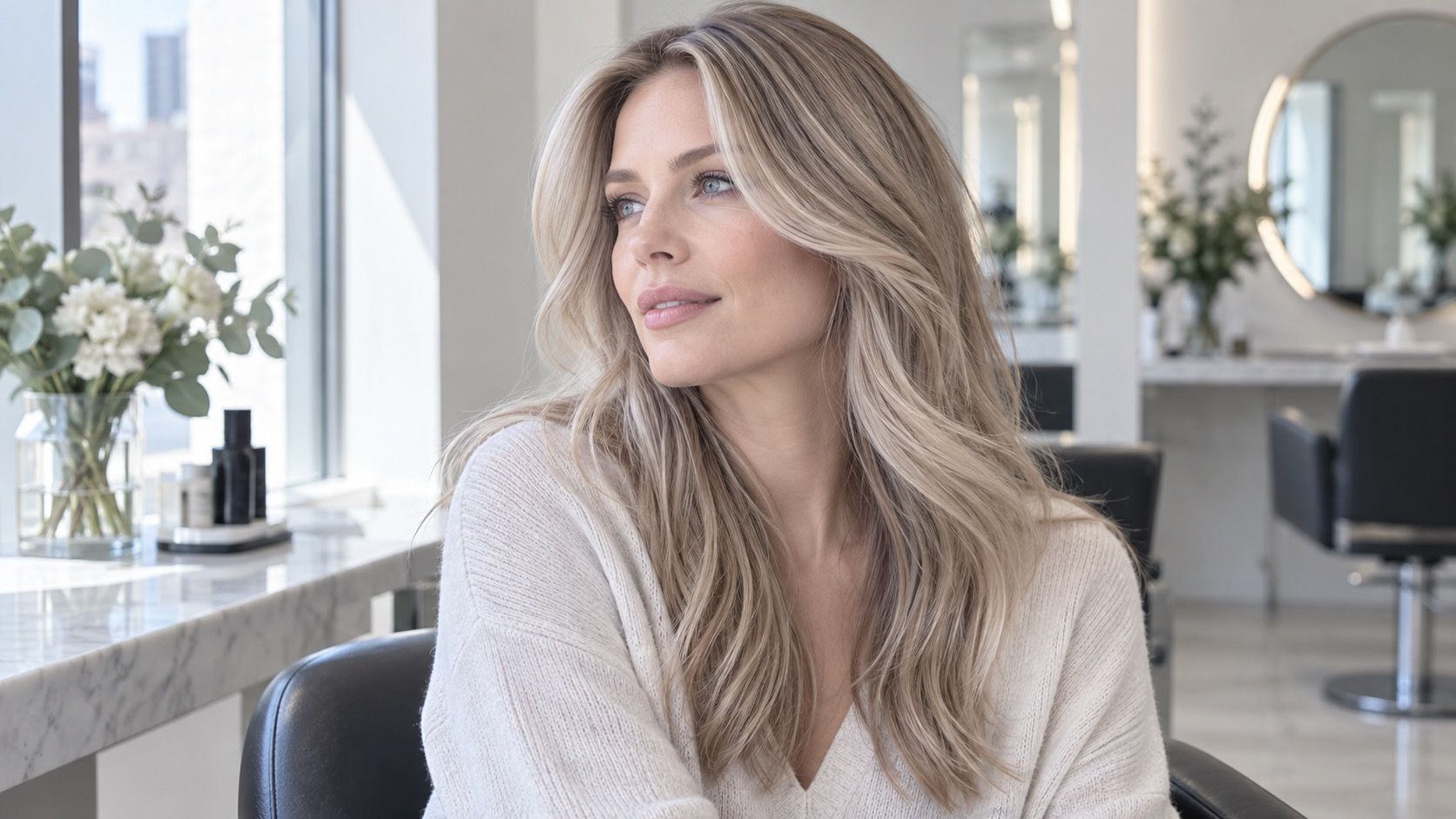
Cool Summer hair colors usually look their best when they are visibly cool but not lifeless, polished but not lacquered into one dark block. The balance is slightly clearer than a very muted palette and less stark than an icy high-contrast look. A good result does not need to advertise its temperature. It simply leaves the skin looking calm, the eyes present, and the hair believable in daylight.
What “cool” should look like beside your face
Cool is often mistaken for gray. In hair, grayness can be part of the formula, but it is not the objective. The better question is whether the shade avoids an orange, yellow, or red cast that fights your natural coloring. A clear ash blonde may look fresh on one person and too dusty on another; a cool beige may be the more useful middle ground. Cool Summer is a direction for comparison, not a scientific verdict about what anyone is allowed to wear.
Test the direction with ordinary objects before booking an overhaul. Hold a cool blue-grey top, a soft white, and a warm camel fabric near the face in daylight. Notice whether one makes shadows under the eyes stronger or makes the skin seem yellow. Then look at your natural hair root in the same mirror. This small exercise will not name your exact salon formula, but it can tell you whether your planned hair color needs more clarity, more softness, or less warmth.
Find the lightness level that still feels like you
Level matters as much as undertone. A cool medium brown can feel sophisticated on a person whose natural root is already dark blonde or brown, while the identical name on a light natural base may look heavy. Conversely, a pale ash blonde can look airy on someone with naturally light hair but make a medium root seem disconnected after a few weeks. The most wearable change often stays within two levels of the natural base and adds interest through placement rather than a dramatic jump in value.
Ask to look at swatches near the jawline, not just against the back of your hand. The hand sees different sun exposure and usually has a different amount of surface warmth. Also ask how the shade looks before it has been curled and photographed. Freshly styled hair catches light in a way that makes almost every blonde look expensive. The more revealing view is straight or lightly waved hair outside the salon, where uneven warmth and overly dark roots are easier to spot.
Choose blonde options for brightness without yellow
For Cool Summer hair, ash blonde, pearl beige, and cool champagne are useful families to explore. They can bring brightness around the face without the strong yellow cast of a golden blonde. The distinction is important: a cool blonde should still have reflect. When every trace of warmth is removed from already porous hair, the result can go chalky and make the complexion look flat. Fine highlights, a gentle root melt, and a neutral-cool gloss often create a more natural finish than trying to make every strand the palest possible shade.
Pay attention to the front pieces. They are the parts that meet your eyebrows, eyes, and skin in every photo. A few softly blended cool-beige pieces can give the face light without the high-contrast stripe that a heavy money piece creates. If you wear your hair tied back often, ask to see how the color is placed around the hairline and nape. A plan that looks beautiful only when the hair is down is not automatically a practical plan.
Use brunette shades with enough movement
Smoky brown, cool cocoa, taupe brown, and a deep mushroom shade can all work well when the color has movement. One opaque dark brown can swallow the subtle differences that make a cool palette look alive, particularly under indoor lights. A slightly deeper root with fine cool-neutral ribbons through the mid-lengths keeps the color dimensional without turning it into obvious highlights. It also tends to grow out more gracefully than a solid all-over dark dye.
| Starting point | A useful Cool Summer direction | Question to ask at consultation |
|---|---|---|
| Natural dark blonde | Cool beige ribbons with a soft root melt | Will the lift expose gold that needs regular toning? |
| Medium brown | Smoky brown with subtle cool dimension | Can depth be added without an almost-black result? |
| Previously lightened blonde | Pearl or ash-beige gloss with gentle lowlights | Are the ends porous enough to grab violet pigment? |
| Growing in grey | Cool-neutral blending rather than solid coverage | Where should lighter pieces sit to soften the regrowth line? |
For grey blending, variation is especially helpful. A color that includes the natural silver, a cooler lowlight, and a few light pieces can look deliberate as it grows. Solid coverage may initially seem neater, but it creates a sharper maintenance line. There is no moral advantage to either route; choose the one that suits your calendar and how often you want to think about your roots.
Keep the cool clarity after the salon
Cool tones do not disappear because the stylist did something wrong. Lightened hair exposes underlying warmth as the surface toner fades, and mineral-heavy water, hot tools, and frequent washing can make the change feel quicker. The important part is agreeing on the maintenance before the first appointment. Some people are happy with a gloss every six to eight weeks; others would rather choose a softer, more neutral result that fades less dramatically.
Violet shampoo is not an automatic answer. On very pale sections it can temporarily read lavender or dull, while on darker warm areas it may barely show. Use it according to the advice that fits your hair’s porosity and the color goal. A plain color-safe shampoo, heat protection, and less aggressive water temperature often preserve a polished finish better than trying to correct every wash with pigment. Take a daylight photo after the first few washes so you can tell whether the color is becoming warmer, darker, or simply less glossy.
Bring references that explain the effect, not just the color name
Save photos that show the texture and lighting closest to your own hair. Then write a sentence under each: “I like the cool brightness near the face,” “I like the depth but not the black-looking root,” or “I want this softness, not the bright stripe.” A colorist can work with those observations. A single photo labelled “ash blonde” is less useful because it might be edited, backlit, or built on a completely different starting level.
Be candid about past color, especially dark dye, home glosses, and very light ends. That history affects how a cool result is reached and how predictable it will be. If the change is substantial, a test strand can tell more than a promise. Cool Summer hair color works best when the plan respects both the desired tone and the hair’s actual condition. The strongest result is one you still enjoy in a work mirror, a rainy-day selfie, and the weeks between appointments.
Decide by repeatability, not by a perfect salon photo
A successful shade should fit the rest of your life: the clothes you wear most, your usual makeup, your budget, and the time you have for upkeep. View it with your familiar neutrals and in the lighting where you spend mornings. If it repeatedly makes you look clear rather than overdone, it is probably in the right family. If it requires a very specific filter, outfit, or curl pattern to feel right, adjust the contrast or the temperature before making the next appointment.
That is the useful promise of Cool Summer as an idea. It offers a way to ask better questions: Is this too warm? Too dark? Too sharp? Does it need dimension? The answers are individual, but the questions turn a vague wish for “cool hair” into a color choice that can be made, maintained, and enjoyed.