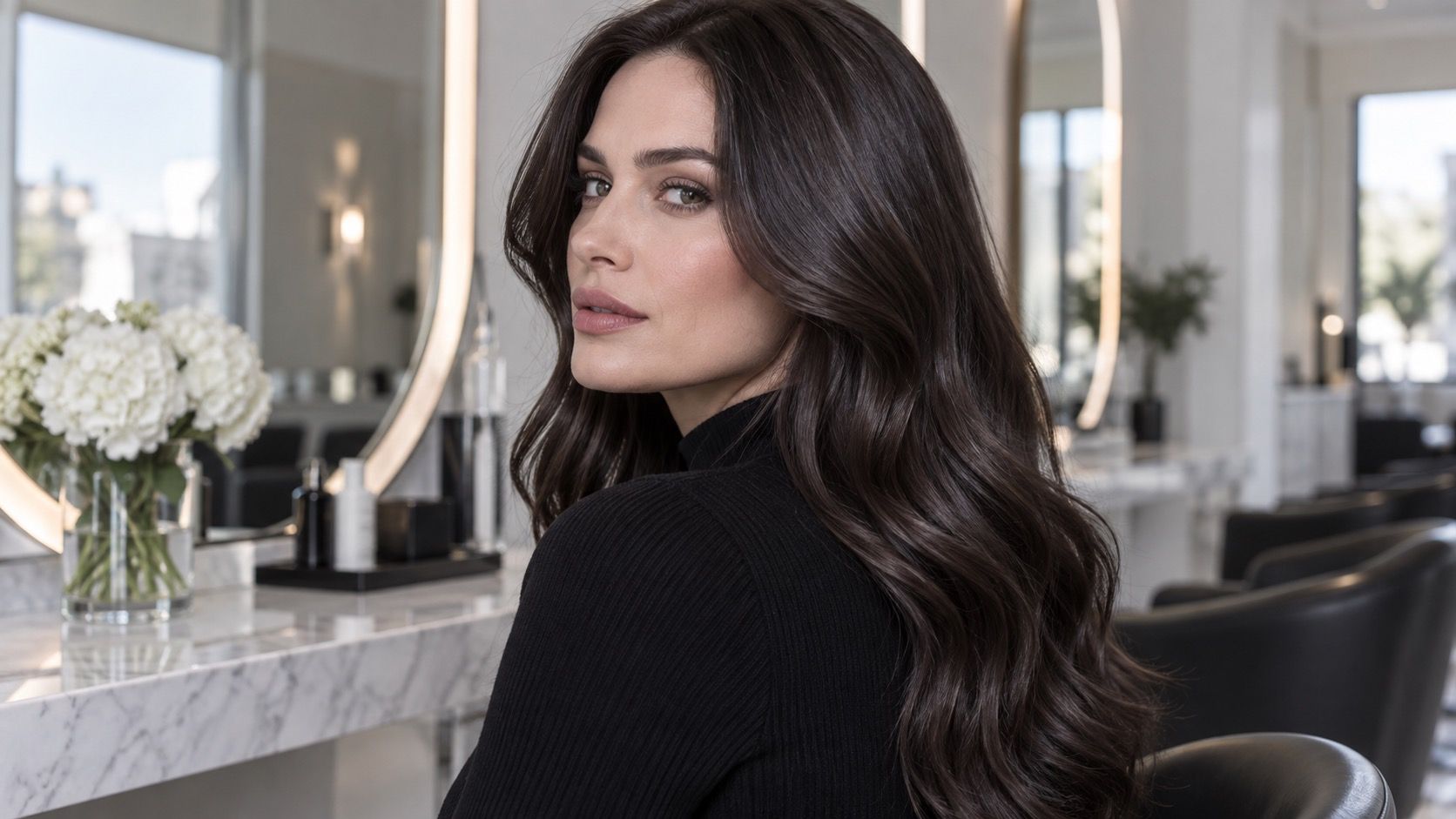
Choosing a hair colour is often treated as choosing a shade name, when the more consequential choice is depth: how light or dark the overall result sits next to your skin, brows and natural root. Get the depth right and even a modest gloss can look deliberate. Get it wrong and a beautiful beige blonde or chestnut brown can feel like it belongs to someone else by the second week.
Start with the question a shade chart cannot answer
Hair level is the salon shorthand for depth, generally moving from very dark at the low end to very light at the high end. You do not need to memorise the numbers to make a good decision. Stand near a window with clean daylight, pull your hair back from your face, and look at the band of untouched growth at the parting. That is the reference point a stylist is working from, not the faded lengths you see in a bathroom mirror.
The useful question is not “Could I be blonde?” Almost anyone can wear some version of blonde, brown, copper or black. Ask instead: how far away from my natural root can I live comfortably? A shift of one or two levels may read like better lighting. A jump of four levels changes the whole balance of the face and makes the returning root a visible part of the look.
Take two photographs in the same daylight: one with hair loose, one pulled back. A hair color simulator can be useful here as a rough comparison tool, especially if you test only depth first and ignore dramatic filters. It will not predict real texture or reflectivity, but it can show whether a pale frame removes definition from your face or whether a darker frame makes it look sharper than you intended.
Read the natural root, not the memory of your “real colour”
Many people describe themselves by the colour they had at sixteen, or by the label on the last box they bought. Neither is much help at a consultation. The most honest place to inspect is the first inch of hair at the crown and around the temples. Separate a few strands with a comb. If that growth looks medium brown outdoors but almost dark blonde indoors, call it a middle depth with neutral movement rather than arguing over a single name.
Natural roots are rarely flat. A person who sees “mousey” hair may actually have a darker base with fine lighter pieces around the hairline, while another person with apparently solid brown hair has warm gold reflecting through it. This matters because a new colour that echoes those small variations grows out more quietly. A root smudge, soft highlight pattern or sheer gloss can make the transition look intentional rather than like an appointment was missed.
If you colour your hair, bring a photo of the root taken before a recent service if you have one. Otherwise say plainly what is on the lengths: permanent dark colour, old lightening, a copper gloss, grey coverage, or several years of mixed history. A reliable hair color analysis begins with this inventory. It gives the stylist a realistic starting point and keeps a reference photo from becoming a promise that ignores the canvas underneath.
Match depth to the amount of contrast your face naturally carries
Depth changes contrast before it changes “vibe.” Look at the relationship between your skin, eyes, brows and lashes without makeup. If your brows and eyes are visibly deeper than your skin, going extremely light can leave the face looking unfinished unless you enjoy maintaining stronger brow definition and makeup. If your features are naturally soft and low-contrast, an inky all-over shade may arrive before you do in every photograph.
This is not a rule that bans dramatic colour. It is a decision about how much visual contrast you want to create each morning. A medium brunette with fair skin and pale brows may love a level that is richer than her natural base, but she should see it in ordinary daylight and on a day when she is not wearing a full evening face. A light blonde with dark lashes may find that a slightly deeper, beige-rooted version looks more expensive because the eyes remain the first thing people notice.
Try a simple test with fabric or a towel. Hold a pale cream, a medium brown and a near-black colour below your chin in daylight. The cloth is not hair, yet it reveals whether a depth makes shadows under the eyes look stronger or lets the skin look clearer. Then compare that observation with a photo, because phone cameras can exaggerate contrast in ways a mirror does not.
| If your face reads as... | A sensible depth direction | Check before committing |
|---|---|---|
| Soft, low contrast | Stay close to the natural middle range; add subtle dimension | Make sure very dark colour does not overpower brows and skin |
| Clear, high contrast | Light or dark can work, but preserve definition near the face | View the proposed colour without heavy makeup |
| Warm and golden | Choose depth first, then decide how much warmth to retain | See whether an ash tone looks grey rather than refined |
| Cool or muted | Consider neutral, beige or softly cool depth changes | Check that extra warmth does not turn orange after a few washes |
Choose the regrowth line before choosing the highlight photo
The first practical cost of a lighter or darker colour is not the initial appointment; it is the line that appears at the parting afterwards. A bright platinum effect against a medium brown root can look striking for a short stretch, then starts announcing its own timetable. A very dark global colour over naturally lighter hair has the same issue in reverse. Neither choice is wrong, but both need a maintenance rhythm that belongs in your calendar.
If you prefer appointments several months apart, ask for a transition rather than a solid block: fine highlights, a lived-in blonde, ribbons of depth through the mid-lengths, or a root shadow that resembles your actual base. The phrase “low maintenance” can be misleading. Lightened hair may still need a toner or gloss even when the root line is soft, while a close-to-natural brunette may need little more than shine refreshes.
Be specific about your most visible parting. A centre part exposes a clean strip of regrowth; a side part can blend it differently. The hairline is another separate problem area. If grey lives there, or if it is naturally much lighter than the crown, tell the stylist. A plan that works on a neat salon blow-dry should also work on the way you normally clip your hair up on a Tuesday.
Use the lengths as evidence, not as a target
Old colour gives useful clues. If your ends have faded much warmer than you like, the lesson may be that the next formula needs a different tonal direction, but it may also be that the ends are porous and holding colour differently. If your old highlights still look good after months, photograph them in daylight and point to the placement, not only the overall colour. This is more informative than saying you want “natural.”
Depth also looks different on different textures. A one-dimensional dark colour can make very fine hair look denser, but on a thick wave it can read like a single heavy curtain. Lightness catches bends and layers; too much lightness can make dry ends look thin. During a consultation, ask to see a few pieces lifted away from the head. The underside, the nape and the face frame often reveal whether the colour has enough movement to survive your normal styling.
A gloss is useful when the depth is nearly right but the finish feels dull, faded or slightly too warm. It can refine the overall impression without forcing a large permanent move. That is often the more sensible next step after a hair color simulator has shown you a direction: test the level softly, wear it for a few weeks, then decide whether you genuinely want to travel further.
Make a depth decision you will still like at week eight
Before booking, write down three things: your natural root description, the lightest or darkest result you have enjoyed in real life, and how often you are willing to return. Add a daylight photo of a colour you liked on yourself, not just on someone with a different brow colour and cut. This short record cuts through the familiar salon panic of choosing between ten nearly identical reference images.
Then give the stylist a range rather than a demand. “I want to stay within two levels of my root, look a little brighter around my face, and avoid a hard grow-out” is a useful description. So is “I am happy to be noticeably darker, but I do not want to fill in my brows every day.” It connects the visual result to the life around it.
The best depth is usually not the one that makes the biggest change under salon lights. It is the one that still gives your face structure after a rushed wash day, a cloudy commute and six weeks of honest regrowth. Once that base decision is solid, tone, shine and highlights become much easier—and much more fun—to adjust.