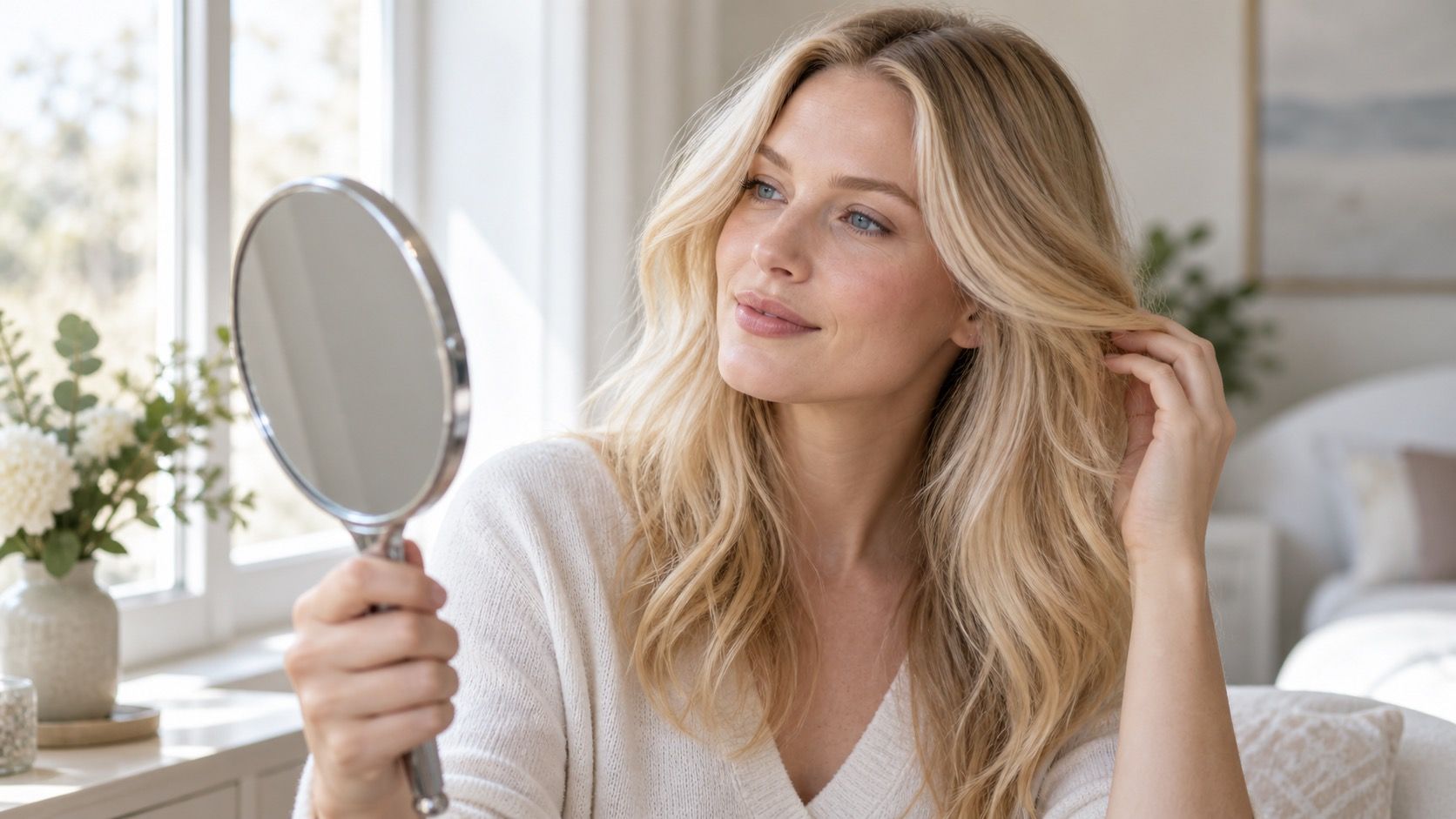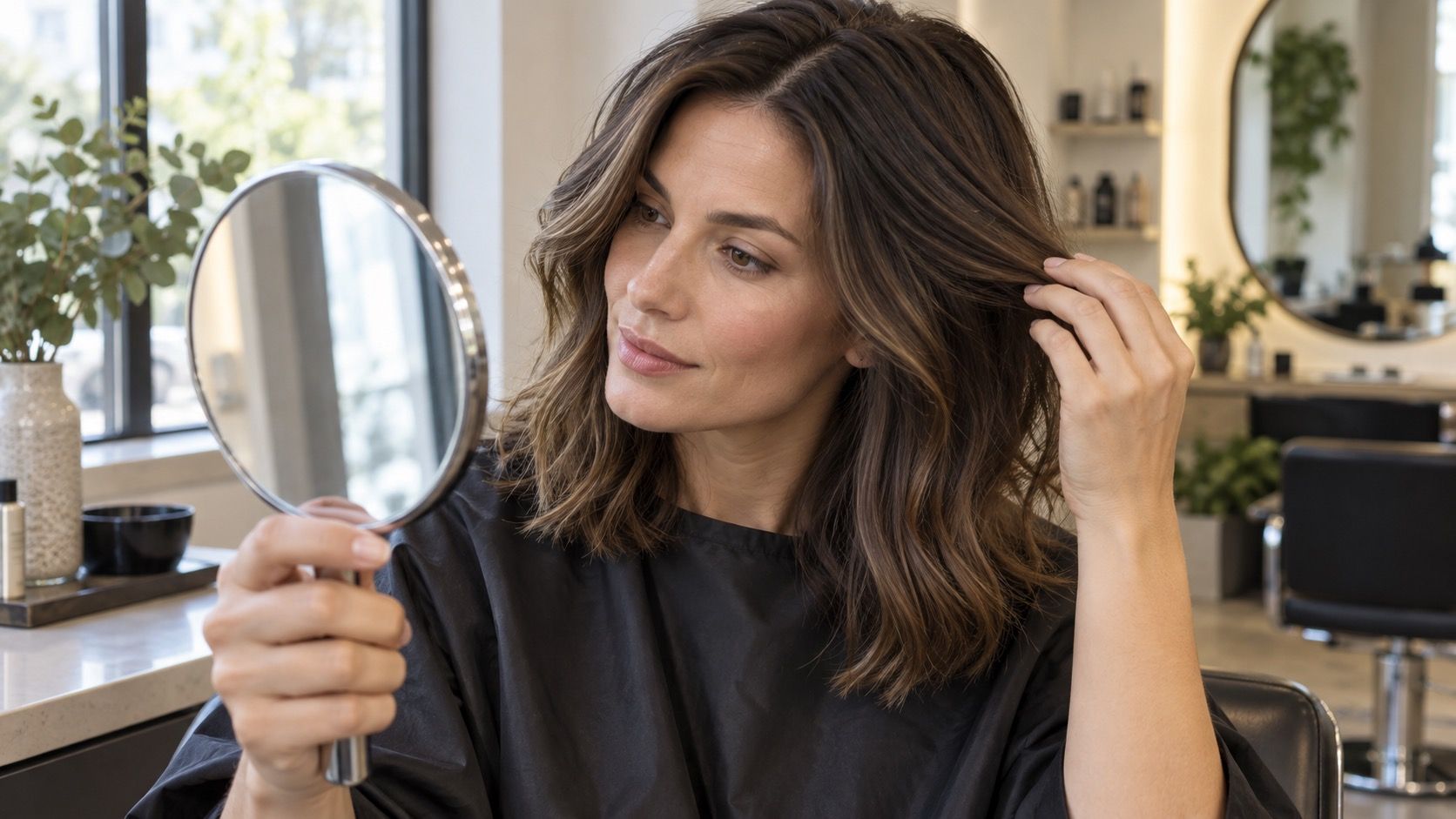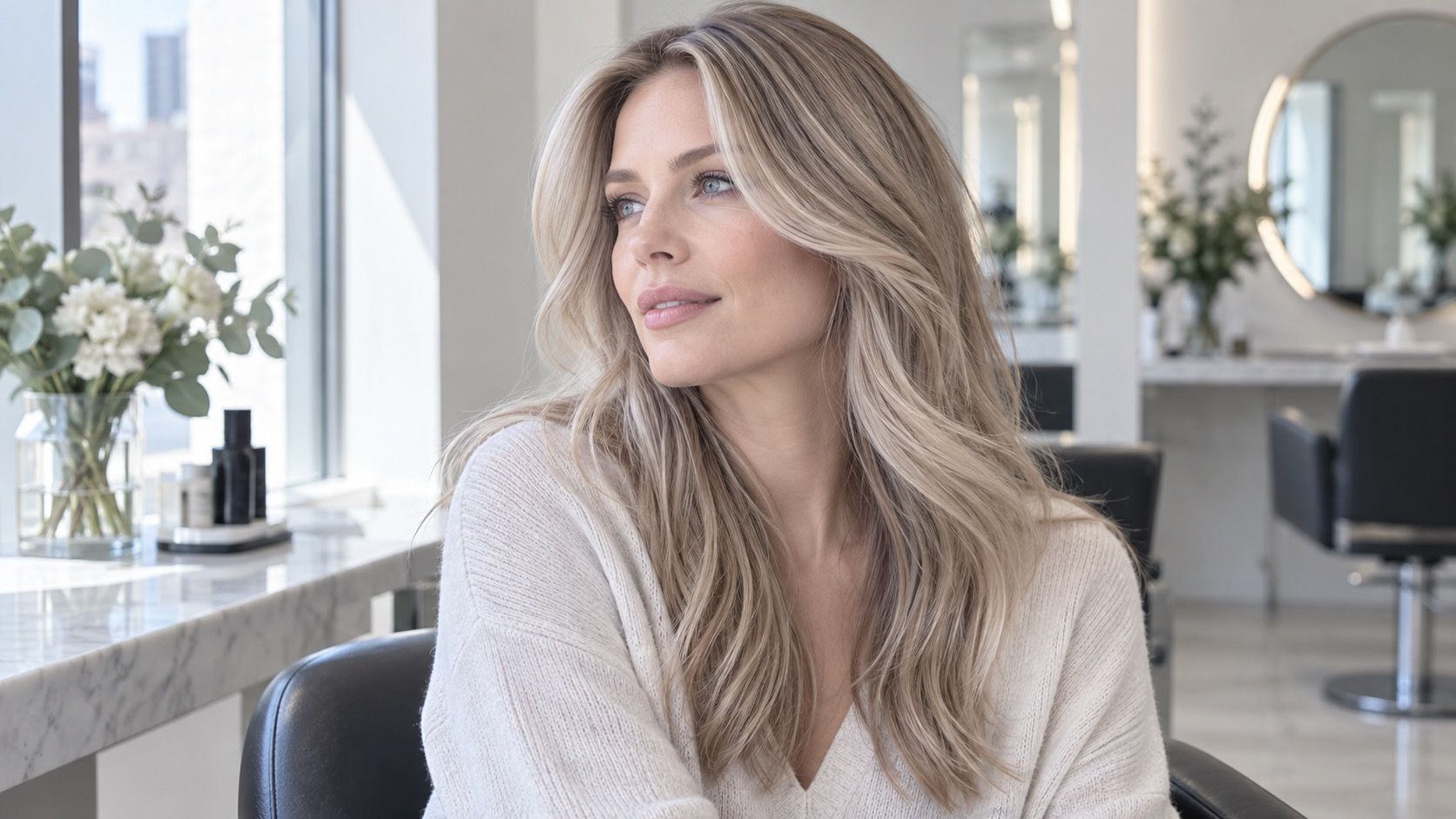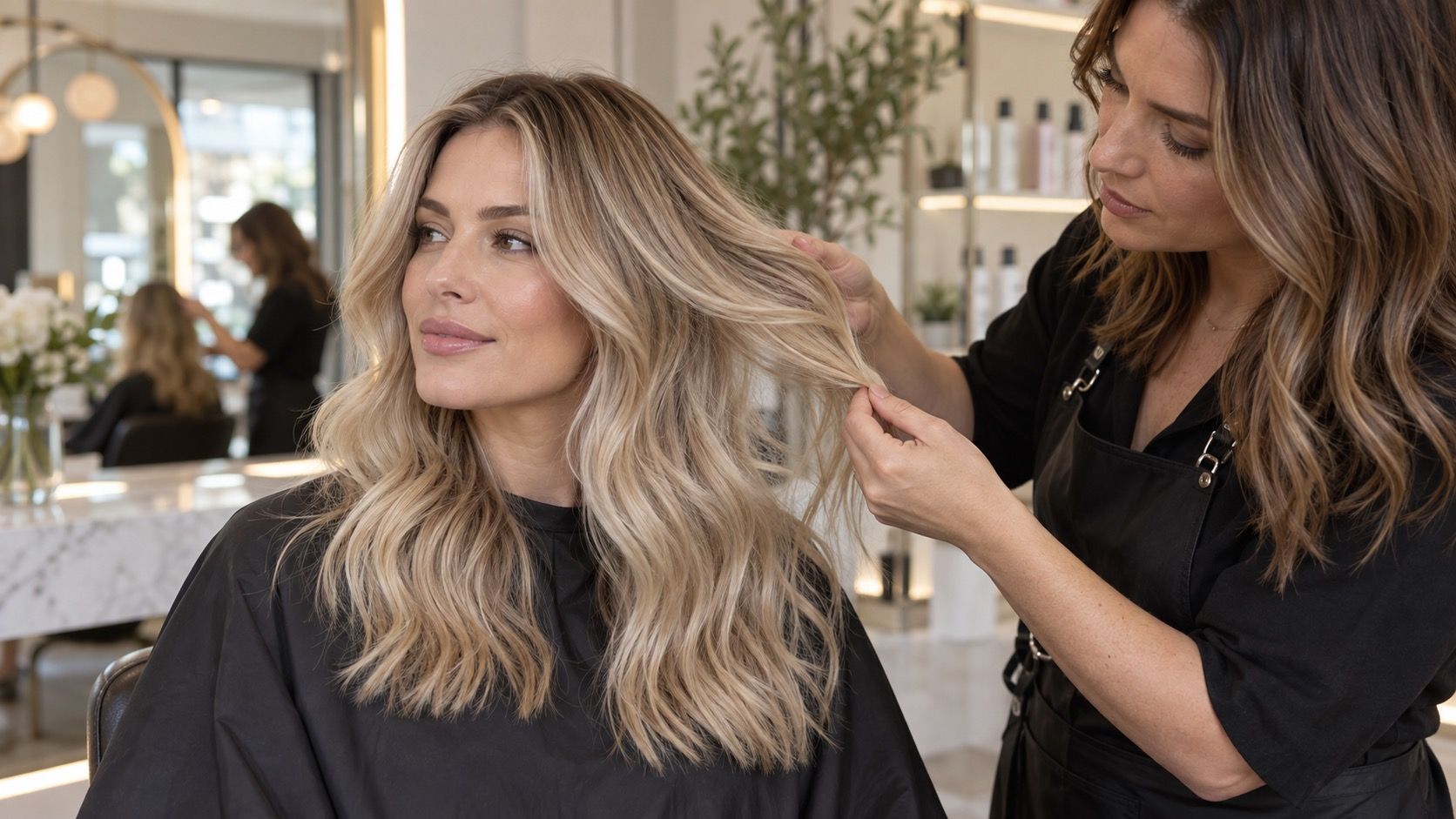
Brassy hair is not one colour problem. A pale blonde can turn buttery yellow, a darker blonde can show orange, and a cool brown can reveal reddish warmth in sunlight. The useful first step is to identify what is actually showing through. Once you can describe the warmth, it becomes easier to decide whether you need gentler maintenance, a toner refresh, or a conversation about the original lightening work.
Yellow and orange point to different starting points
Yellow usually appears on hair that has been lifted fairly light. Think of a light blonde that looks clean near the root but banana-yellow around the face after several weeks. Orange is deeper and more noticeable: it can show in dark blonde, light brown, or old highlights that were never lifted to a pale enough base for an icy finish. Red-orange warmth can also appear in brunettes when a cool gloss fades away.
The distinction is practical because one violet-toning product cannot solve every warm result. Violet sits opposite yellow; blue is more relevant to orange. Even then, shampoo is a light maintenance tool, not a substitute for changing the underlying level. If an orange band appears under a previously cool beige blonde, treating it with stronger purple products may only make the palest pieces look smoky while leaving the band intact.
Why a cool colour gradually reveals warmth
Most cool shades are created over hair that naturally contains warm pigment. Lightening exposes those warm stages; a toner, gloss, or demi-permanent colour then steers the visible result toward ash, pearl, mushroom, or neutral beige. The steering layer is often the first thing to fade. Sun, frequent washing, heat styling, and porous ends can make that fade more obvious, but they do not invent the warmth from nowhere.
Porosity changes the story further. The most lightened ends may grab a toner quickly at the salon and release it quickly at home. Meanwhile, a less porous mid-length can stay warm because it never accepted as much cool pigment. This is why a single all-over purple mask sometimes produces a strange mix of silvery tips, yellow face-framing pieces, and an orange interior. Uneven hair needs an unevenly intelligent plan.
Ask what the original service was meant to achieve
Bring two photos to a correction consultation: one from the week your colour looked right and one in daylight now. Then ask whether the target is realistic at your current level of lightness. A bright, cool winter look may require a lighter, cleaner canvas than a soft, smoky cool summer hair color. Neither direction is better; they simply have different tolerance for visible gold. A colourist can explain whether the next visit is a tone adjustment, more lightening, or a shift toward a lower-maintenance neutral.
It also helps to name placement. Is the brassiness only around the face, across old highlights, underneath the crown, or through every length? Ask whether a root shadow, finer highlights, or a more blended placement would make grow-out less obvious. A hair color analysis can guide the temperature and contrast you enjoy, but it cannot make a very pale, cool result permanent on a warm and porous base.
What a toner and gloss can honestly do
A salon toner can neutralise visible yellow or orange, rebalance beige, and make highlights look more connected. A gloss can add shine and subtly alter the temperature of brunette, copper, or blonde hair. Both work best when the hair beneath them is reasonably even. They do not erase a dark band, rebuild broken lightened hair, or safely take a warm level five brunette to a clear icy blonde in one short appointment.
Ask how long the finish is expected to look its freshest, what it will fade toward, and which areas may release tone first. Those questions are more helpful than asking for the coolest possible formula. If you like a neutral blonde but hate the first hint of gold, a slightly deeper beige or a more frequent gloss schedule may suit you better than an aggressively ashy finish that turns dull after two washes.
| Visible warmth | Likely situation | Useful question for the salon |
|---|---|---|
| Soft yellow on light blonde | Cool finishing tone has faded | Would a violet-based toner or neutral pearl gloss suit this level? |
| Orange through darker blonde | Underlying lift is deeper than the target shade | Is more lightening needed, or is a deeper beige more realistic? |
| Warm bands on old highlights | Different levels of lift and porosity | Can the correction be placed only where the bands appear? |
| Brown reads red in sun | Cool overlay has faded from a naturally warm base | Would a cool gloss add balance without making the colour flat? |
Support a salon result between visits
Use toning care sparingly and observe the response. Start with a short exposure on the warmest areas rather than using it every wash. Follow with conditioner, especially on bleached ends, because roughness makes brassiness look louder. Keep hot tools moving, use heat protection, and rinse after swimming. If hard water is common where you live, ask whether periodic mineral removal makes sense for your colour; mineral buildup can muddy both cool blondes and bright silvers.
Do not keep layering blue or purple products when the result turns khaki, grey, or patchy. That is a signal to pause and look at the overall canvas. A neutral gloss may be more flattering than a heavily toned shade, particularly if you have low contrast features. The goal is not to remove every warm reflection from hair; it is to keep the colour aligned with the depth and mood you wanted.
Book a correction before the problem becomes a project
Schedule a professional correction if orange shows through in obvious stripes, a previously light blonde has gone substantially darker or gold, or home toning creates alternating cool and warm patches. Also book if hair feels overly elastic, snaps during brushing, or looks increasingly dull after every attempt to cool it down. Colour correction is easier when the hair is still in reasonable condition and the unwanted warmth is documented clearly.
At the appointment, explain your maintenance tolerance as plainly as your target shade. Say whether you can return for a gloss in a few weeks, whether you swim, how often you wash, and whether your priority is icy brightness, soft neutrality, or rich dimensional brunette. That lets the colourist choose a finish that will age gracefully rather than one that only looks perfect under the salon lights.