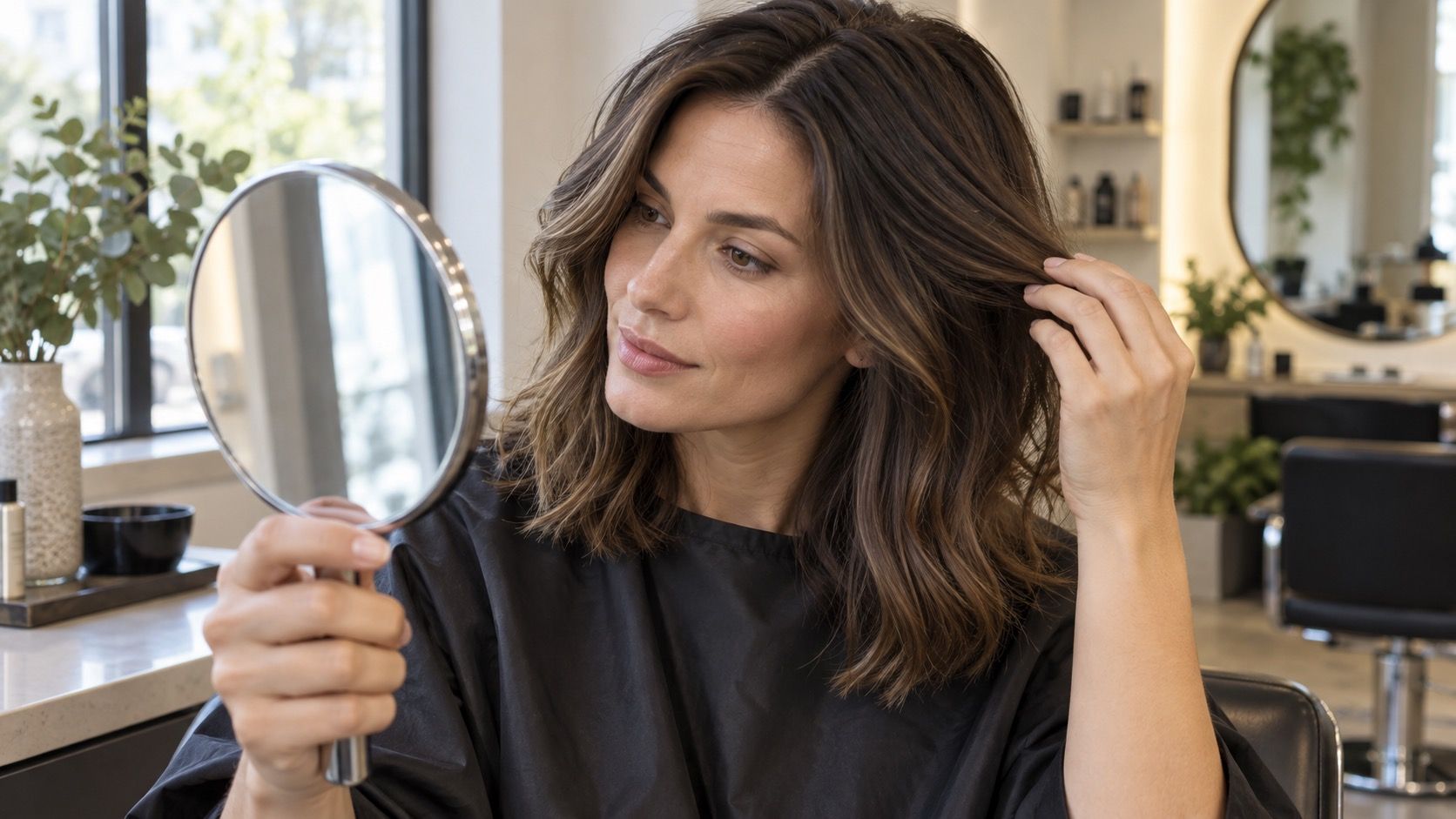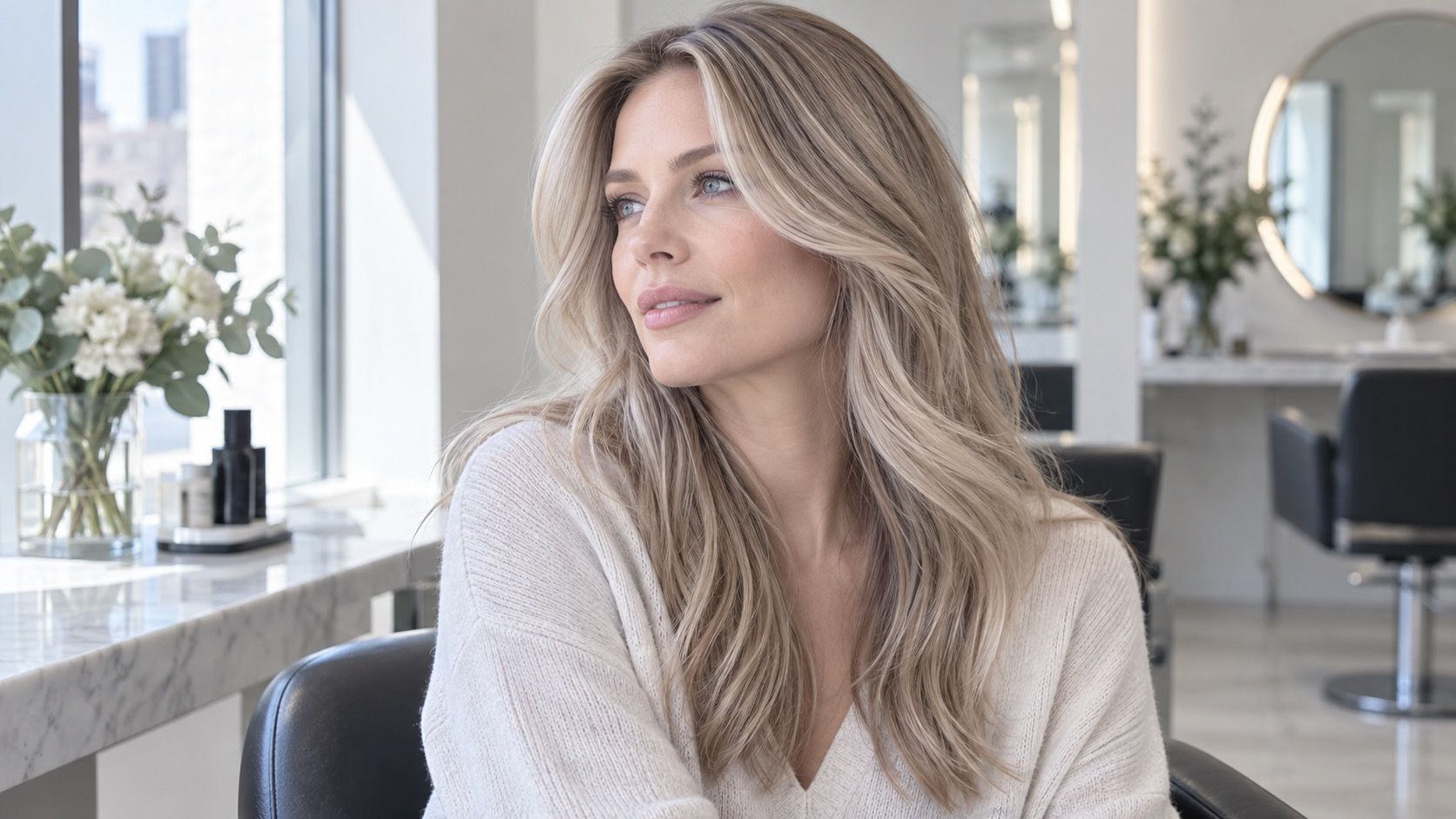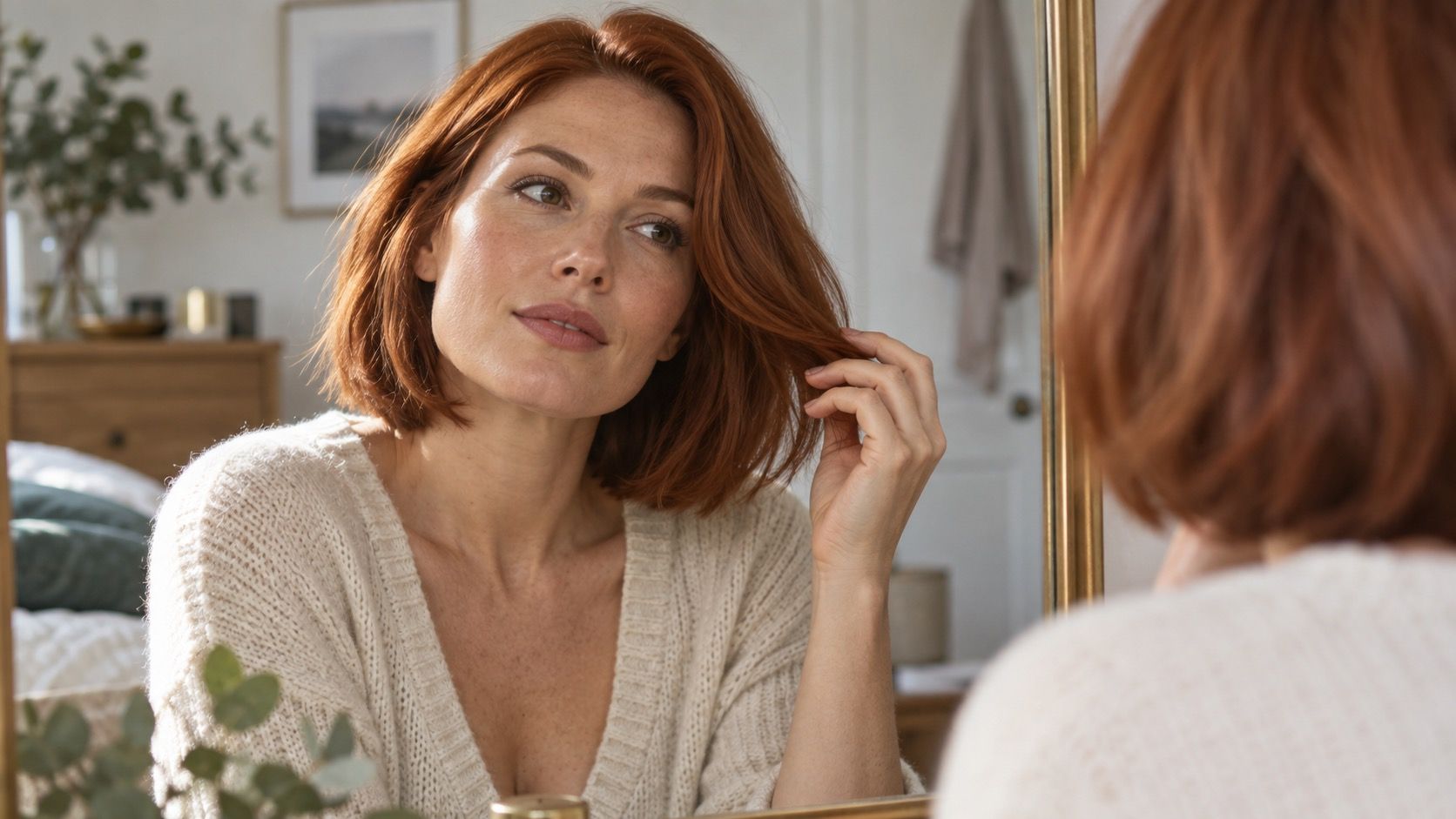
The biggest hair-colour disappointment is often not a bad shade; it is a good shade chosen without a plan for the hair underneath it and the life around it. Going lighter, darker, or red can all look convincing when the starting point, contrast, and maintenance are discussed honestly. Use this checklist to turn a saved image into a request your colourist can actually work with.
Decide what you want to change, not just what photo you like
Start by naming the visible change that appeals to you. Do you want more brightness around the face, a deeper frame for pale eyes, less contrast at the roots, or a warmer mood? These are different goals. A reference may look like a dramatic blonde transformation, while what you respond to is really the soft beige tone, the loose waves, or the darker root that makes the brightness believable.
Separate colour from styling when you collect references. Save a straight, daylight image if possible, plus one image with texture. A photo taken in direct sun can make a medium brown look copper; a heavily filtered image can make a creamy blonde look nearly white. Write down the parts you want to keep: depth at the root, lightness at the ends, warmth, placement, and overall contrast. That gives you a useful set of notes without pretending every head of hair will produce the same result.
Check the starting point before choosing the destination
Your natural base, old colour, and hair condition set the pace. Look at your regrowth in daylight, then look separately at the mid-lengths and ends. The natural root tells a colourist how much contrast will appear as hair grows. The lengths reveal old highlights, previous dark colour, uneven fading, and porous pieces that may grab or lose tone faster. A colour history includes box colour, salon services, glosses, henna, and recent colour removers; leaving out any of these makes planning harder.
Going lighter is usually a process, especially from dark or repeatedly coloured hair. Going darker can be quick visually, but pale porous ends may need warmth put back underneath before a cool brunette stays even. Red tones have their own trade-off: they can create vivid dimension without extreme lightening, yet they often need regular refreshing because red pigment is easy to see when it fades. Honest expectations are kinder to both your hair and your budget.
Choose a level of contrast you can recognise in real life
Hair color analysis is most useful here as a way to notice relationships, not as a rigid rulebook. Notice whether your brows, eyes, and skin look clearer with a gentle blend of tones or with a stronger dark-light contrast. A very light blonde against naturally dark brows can be striking, but it will look intentional only if you enjoy that contrast and maintain the root line. A softer brown with fine face-framing highlights may make the same eyes stand out with far less upkeep.
Test the direction in daylight with clothing you already own. Hold a cool grey, soft cream, warm camel, deep navy, or muted berry near your face and watch what happens to your complexion and existing hair. This is not a verdict on your undertone. It is a quick way to see whether you prefer gold, ash, copper, neutral beige, or deeper espresso beside the colours you actually wear. Take notes rather than trusting a ten-second mirror impression.
| Change direction | What to ask yourself | Likely maintenance point |
|---|---|---|
| Lighter | Can my current hair lift evenly, and how bright do I really need it? | Root contrast, toner, and condition may need regular attention |
| Darker | Do I want a solid depth or visible dimension around the face? | Gloss and fade direction matter more than root lightening |
| Red or copper | Do I prefer soft auburn, bright copper, or a brown-red reflection? | Warm pigment and shine usually need planned refreshes |
| Cool or ash | Will I like the colour when it fades slightly warmer? | Toner timing and mineral buildup become important |
Compare upkeep before you commit
Maintenance is not only the number of salon visits. Include wash frequency, hot tools, swimming, daily sun exposure, and how much root contrast annoys you. A bright blonde with a shadowed root may look good for longer than a solid pale blonde, even if both begin at a similar level. A dimensional brunette can grow out quietly, while a dense copper may need a gloss sooner even when the root line is subtle.
Set a realistic appointment rhythm before the first change. Ask what service you will likely need next: a full lightening session, partial highlights, a toner, a gloss, or a trim with colour refresh. Then consider the gap you can actually manage. If you cannot return often, ask for a version of the idea that leaves more natural depth at the root, softens the face frame, or chooses a tone that fades toward neutral rather than brass.
Use virtual try-on as a sketch, not a promise
A virtual hair color try on is good for narrowing a direction. Use one plain portrait in indirect daylight with your hair visible around the face, then compare only three or four shades at a time. Keep the same image, crop, and exposure for every version. If a simulator changes your skin, eye colour, or face shape, ignore that result. You are looking for the relationship between the hair and your features, not a digital makeover.
Try a conservative option beside the dramatic one. For example, compare beige blonde with pale icy blonde, chocolate brown with blue-black, or soft auburn with vivid copper. The most convincing screen result may reveal that you like a subtle change in depth more than a complete shift in temperature. Save screenshots with simple labels for yourself, then bring the two strongest options to the consultation along with a photo of your natural root.
Arrive with a consultation checklist
Bring reference images in daylight, a clear account of your colour history, and a short list of priorities. Say whether preserving length, avoiding a harsh grow-out, looking cooler, covering grey, or making a major change matters most. Ask what can be achieved in one appointment, what needs more than one session, and what the hair may look like during the in-between stage. A good consultation includes limits as well as possibilities.
Before you agree to the plan, ask where the lightness or depth will be placed, how the colour will fade, how soon a gloss or toner might be useful, and what home routine protects the result. Confirm the budget not only for today but for the next maintenance visit. The best hair colour change is one you still like when the shine softens, the root grows in, and the first fresh photograph is no longer the only reference point.