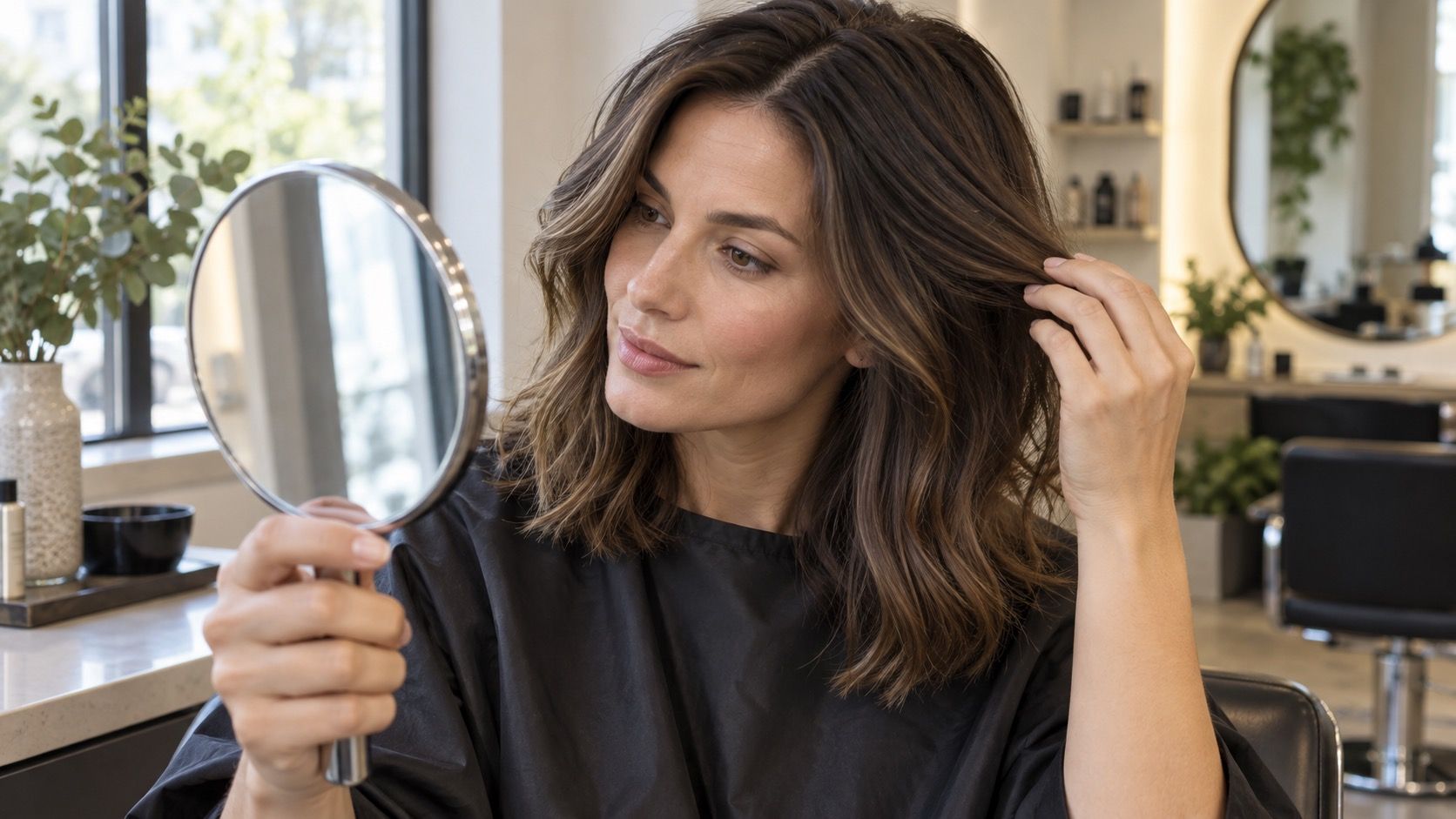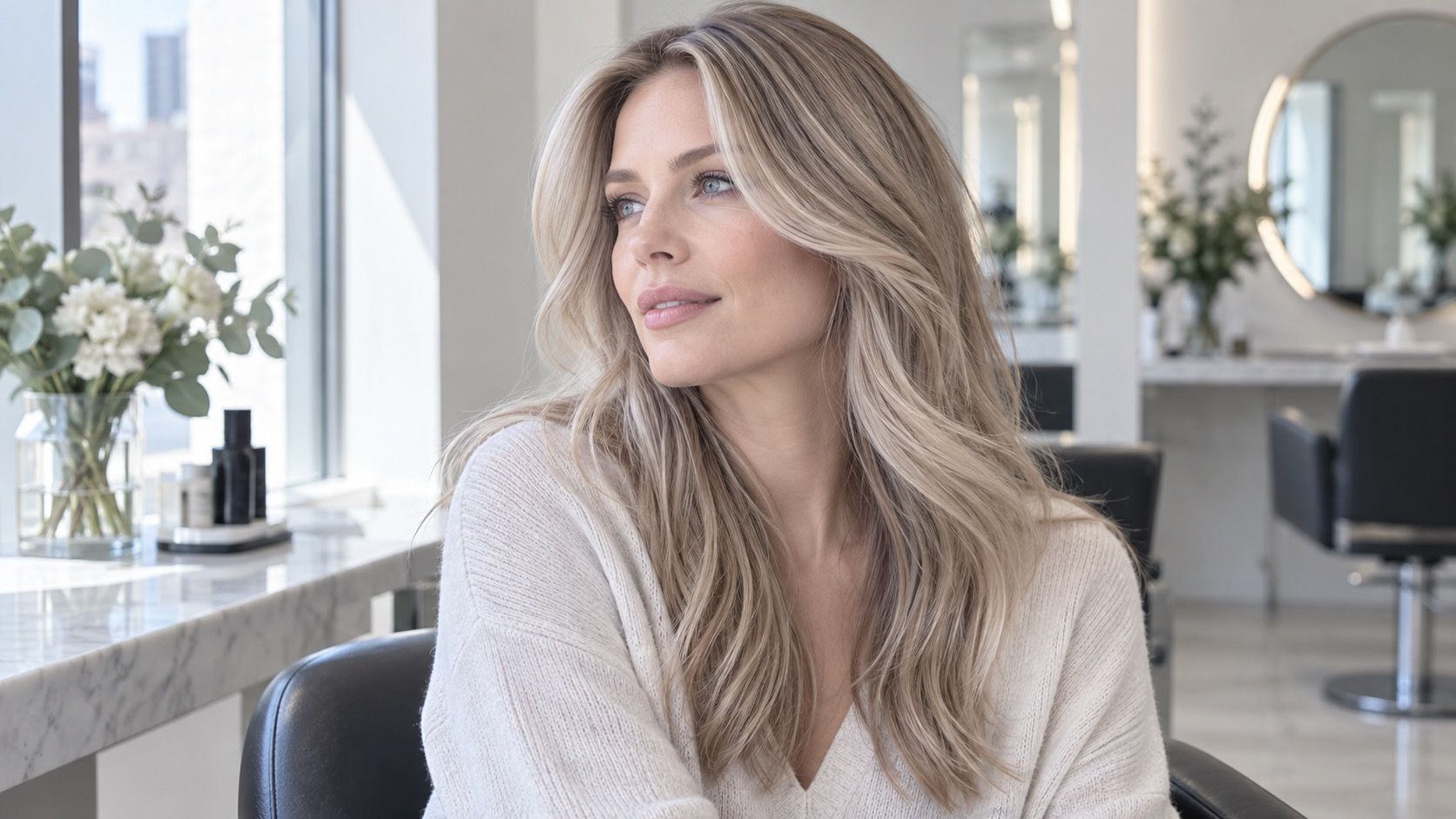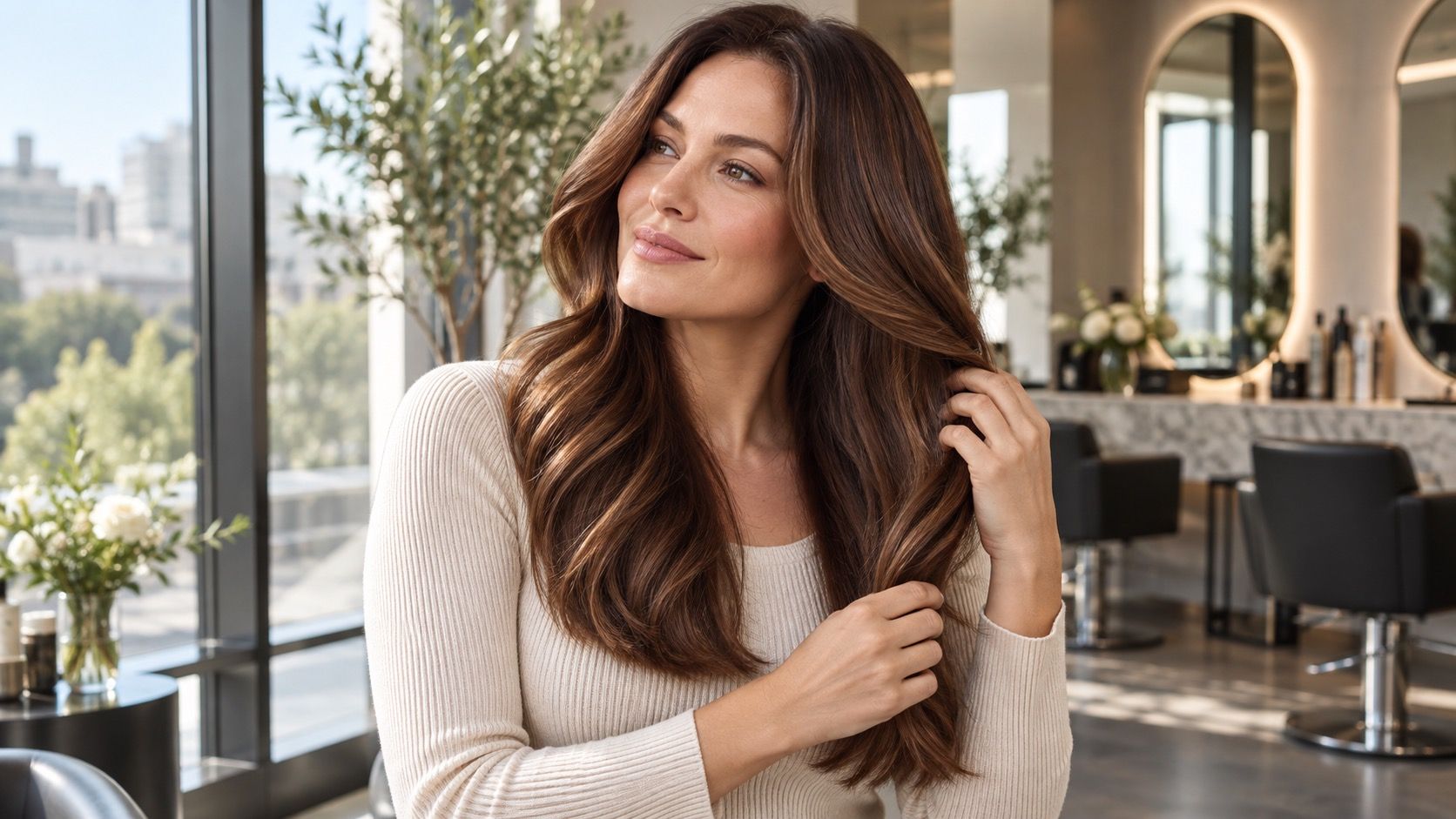
Fresh colour rarely changes all at once. It first loses its reflective finish, then the carefully chosen tone starts to look flatter or warmer in the bathroom mirror. A useful routine protects both the surface shine and the pigments underneath, while accepting that pale blondes, vivid reds, and soft glosses each fade on their own schedule.
Tell fading apart from a change in lighting
Before replacing every product, look at your hair in the same conditions where you liked the colour after the appointment: near a window in indirect daylight, not under a yellow ceiling lamp. Warm indoor light can make a neutral beige blonde look golden and a medium ash brown look coppery. Take one plain photo at the root, mid-lengths, and ends in daylight every two weeks. The comparison shows whether the shift is real or simply the room.
True fading often has an uneven pattern. The ends may look porous and dull, while the root area still has depth. Highlights can turn yellow before the darker base changes. A gloss can disappear as a loss of shine even when the underlying colour remains close to the original. Naming the pattern matters: a shine problem, a tone problem, and a depth problem do not need the same response.
Make wash day less aggressive
Water is the most regular contact your colour has, so small choices here are more useful than an occasional intensive mask. Use comfortably lukewarm water to cleanse the scalp, then let cooler water run through the lengths if it feels pleasant. Very hot water does not instantly strip colour, but repeated heat, strong detergent, and friction can leave the cuticle feeling rougher; rough hair reflects less light and lets colour look spent sooner.
Wash for your scalp rather than washing on a calendar. If the roots are oily, cleanse them properly instead of piling dry products over buildup. If your scalp stays comfortable for several days, stretching a wash can preserve the polished look of a toner or gloss. Work cleanser through the scalp with fingertips, let the foam travel down the lengths, and avoid scrubbing highlighted ends into a knot.
A colour-safe cleanser is useful when it cleans without leaving the hair squeaky or coated. The label is less important than the result after three washes: the scalp should feel clean, the roots should not collapse the next morning, and the lengths should comb without resistance. If hair feels straw-like immediately after shampooing, the routine is probably asking too much of already lightened or porous areas.
Use heat with a plan, not as a punishment
Heat tools tend to make fading visible because they dry the surface and reduce shine. That does not mean giving up a blow-dry. Start with hair that is mostly air-dried, use one heat-protecting product through the lengths, and keep the dryer moving rather than holding it over the same pale pieces. Flat irons and curling wands deserve the most restraint on fragile ends, where a blonde or red tone usually shifts first.
Choose the finish you want before styling. A smooth, reflective brunette may need a careful blowout once a week; loose texture can often be created with lower heat and fewer passes. Repeatedly restyling a small front section is a common culprit because it is also the section everyone sees. If the face frame is looking light and dry, protect it first instead of treating all of the hair as equally resilient.
Give sun, swimming, and mineral water their own rules
Sunlight changes the way colour is perceived and can gradually dry exposed hair, especially at the part line and around the temples. A hat is the simplest protection on a long outdoor day. If you prefer to keep your hair uncovered, tie it loosely, avoid a tight elastic on wet hair, and use a lightweight UV-oriented leave-in product as a finishing layer rather than relying on it to rescue dehydrated lengths later.
Pool and sea days call for a little preparation. Wet the hair with fresh water before swimming so it has less room to absorb chlorinated or salty water, then rinse it soon afterward. Do not judge the colour while hair is wet: mineral residue and temporary dryness can make it look oddly dark or dull. In hard-water areas, a mineral-removing treatment used occasionally can help when blonde pieces look murky or orange despite sensible washing.
Refresh tone without overcorrecting it
Purple and blue toning products are tools, not daily insurance. Purple targets yellow cast; blue helps counter orange. Used too often on very porous hair, they can leave greyish or patchy areas while the warmer sections remain warm. Begin with a short contact time on damp hair, check the result in daylight, and adjust slowly. A cool summer hair color usually needs softness, not an inky violet cast; cool winter hair colors can carry more crispness, but still benefit from even shine.
A clear or lightly tinted gloss is often the calmer option when the issue is dullness rather than obvious brass. It can restore slip and reflection without committing the hair to a dramatic temperature shift. Keep notes after an appointment: which areas were lightened, whether the finishing tone was neutral, cool, or warm, and when the shine began to fade. Those details make a later refresh much more precise than saying that the colour just went flat.
| What you notice | First low-risk check | When a salon refresh helps |
|---|---|---|
| Hair looks dull but not warmer | Review heat, conditioner, and mineral buildup | A clear gloss can restore reflection |
| Pale pieces look yellow | Use a short violet-toning wash and compare in daylight | Toner is useful if yellow returns quickly or looks uneven |
| Brown or blonde looks orange | Consider water minerals and the original level of lift | A colourist can assess whether blue-based toning is appropriate |
| Ends fade first every time | Reduce heat passes and add conditioning to the lengths | A trim, glaze, or more gentle colour placement may be needed |
Know when home care has reached its limit
Call the salon when the colour has changed in bands, the root and lengths no longer belong together, or toning products create uneven shadows. Also book sooner if blonde becomes orange rather than merely yellow, if red loses its richness after only a few washes, or if the hair feels fragile enough that every wash changes its appearance. These are usually signs that the starting canvas or porosity needs attention, not signs that you picked the wrong shampoo.
Bring a daylight photo from the first week after your service and one from the current week. Mention wash frequency, swimming, hot-tool use, and any toning product already tried. A good refresh appointment may be a gloss, a targeted toner, or a rethink of the maintenance schedule. Keeping colour beautiful is less about freezing it in place than about giving it an even, believable fade between visits.