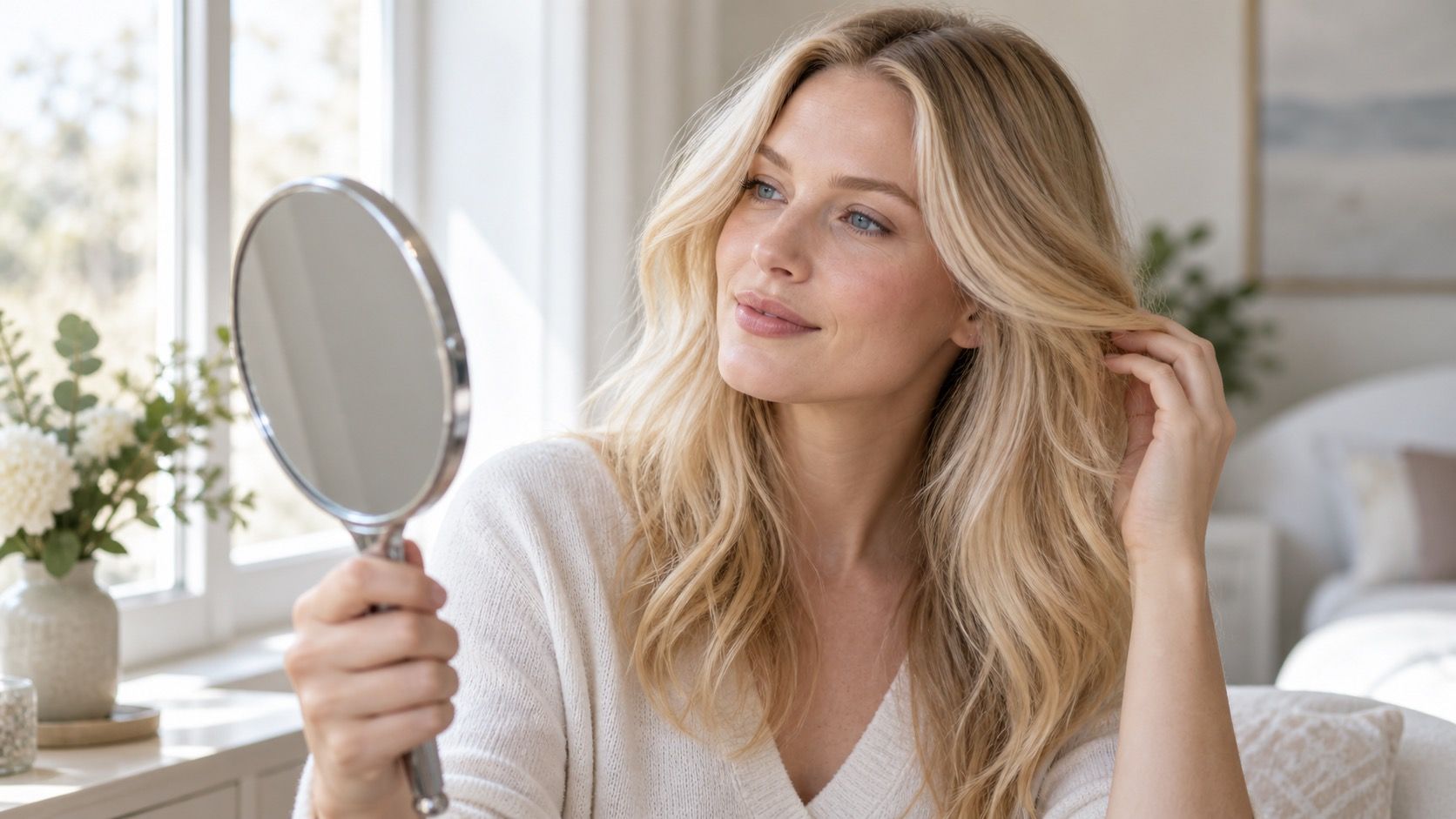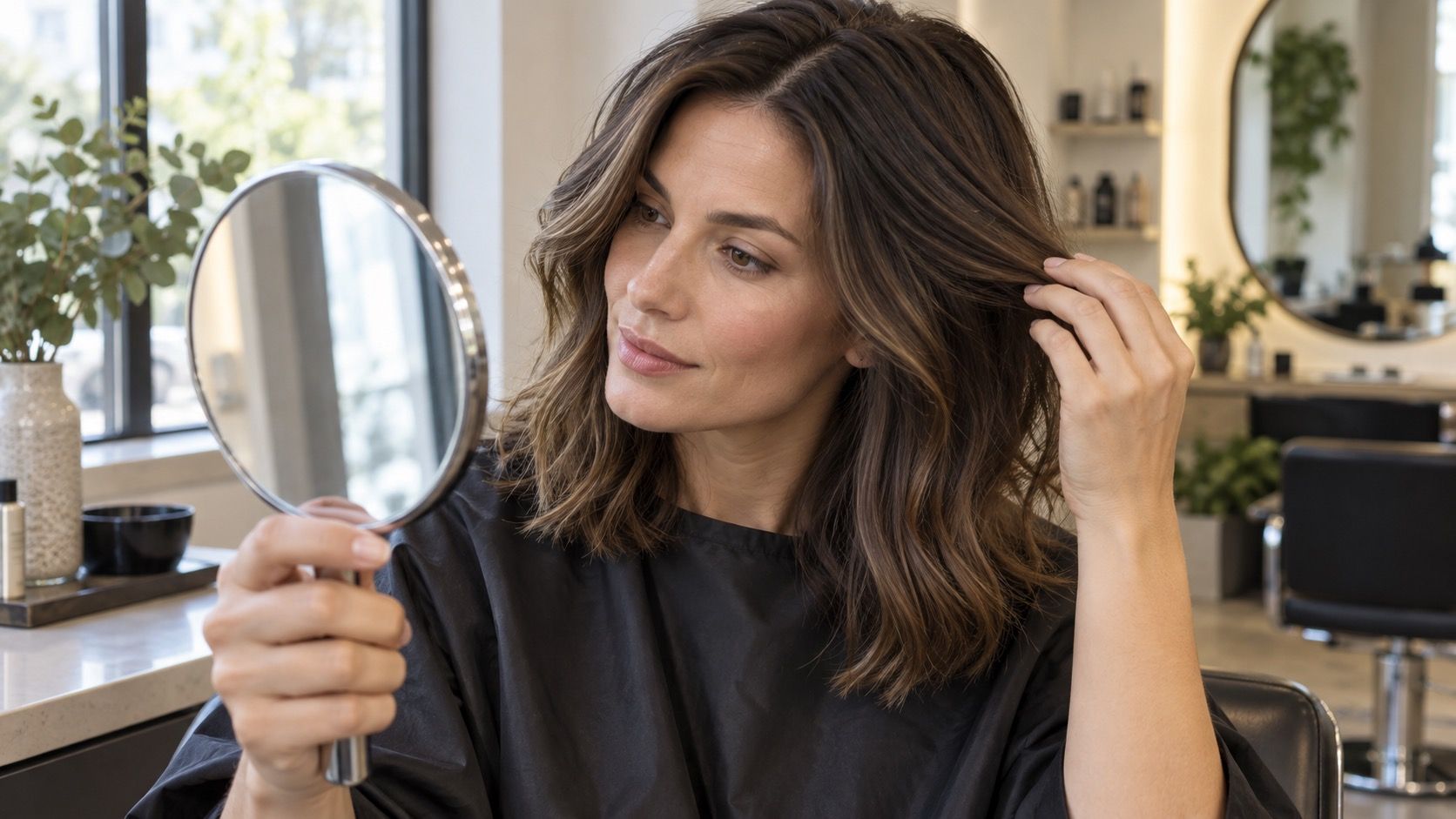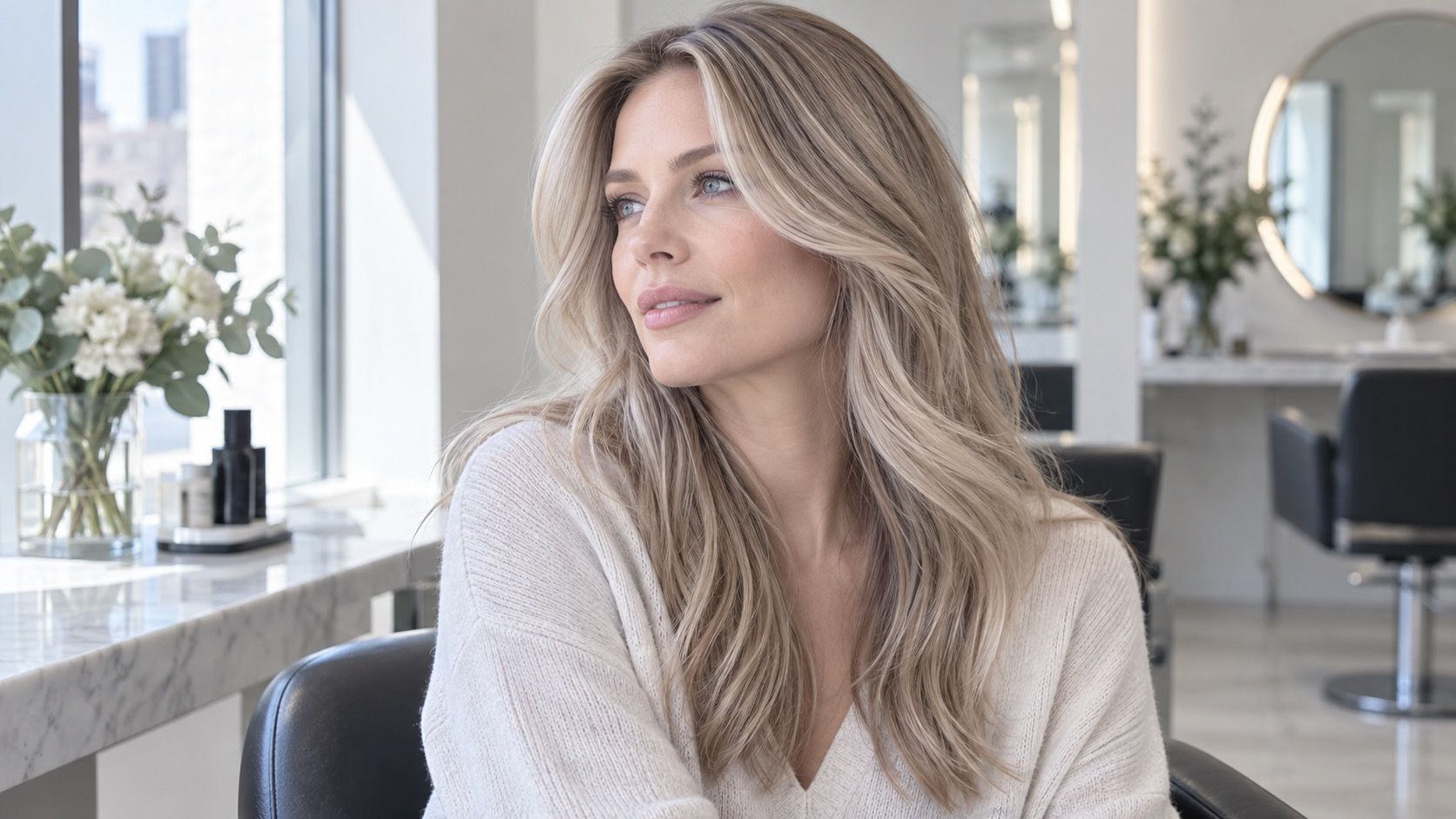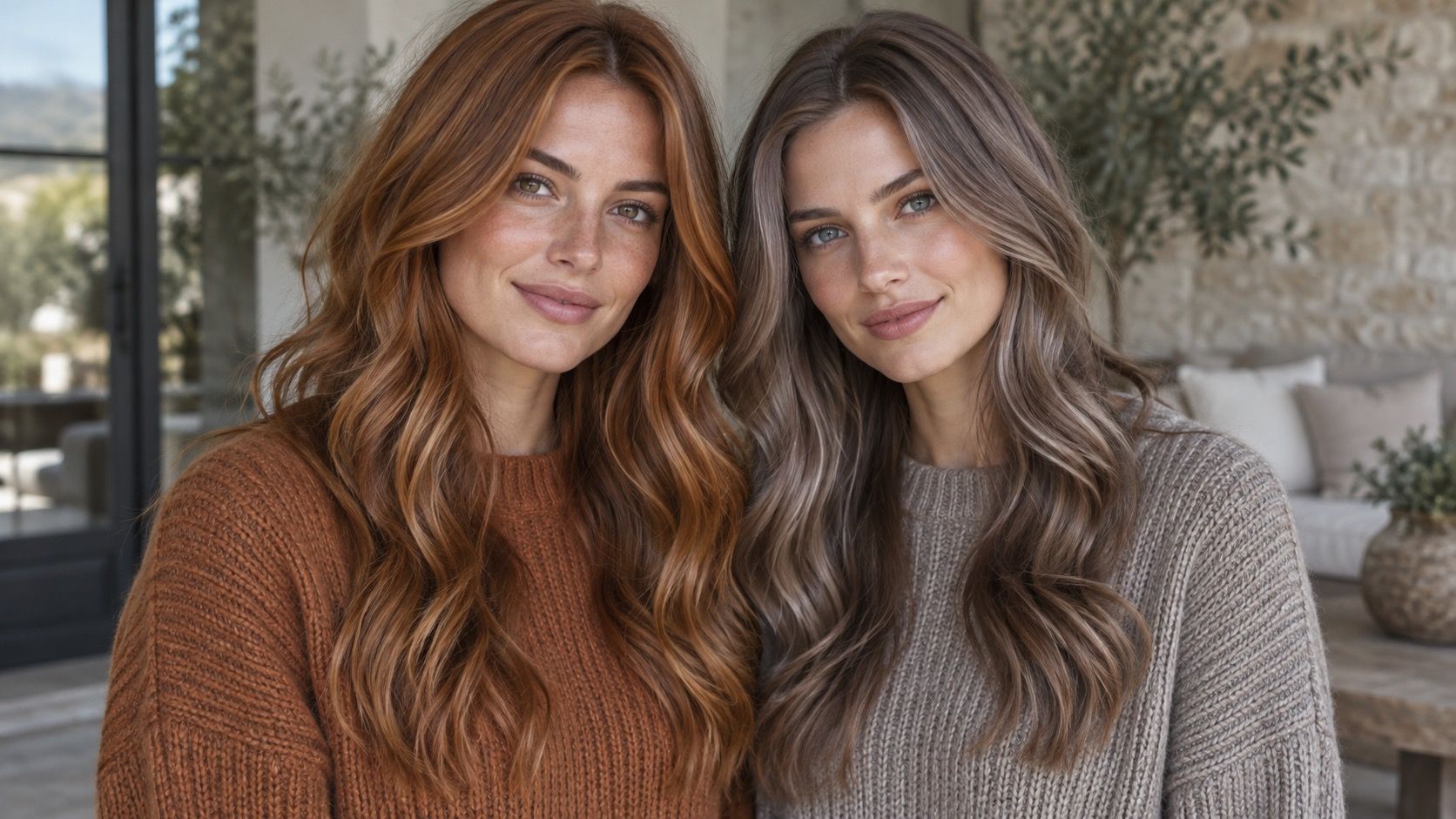
Warm versus cool hair color sounds like a choice between gold and ash, yet disappointing appointments happen in the space between those words. A person can have warm freckles and a cool-looking root, or love copper clothing while finding copper hair too loud. The practical question is not which label you are supposed to be. It is which direction makes your face look clearer in the light you live in.
What warmth and coolness mean on hair
Warm hair colour contains a visible yellow, gold, copper, orange, or red direction. Honey blonde, caramel, golden brown, copper, and auburn are common examples. Cool hair colour leans blue, violet, silver, smoky brown, ash, or blue-red. Ash blonde, mushroom brown, espresso, blue-black, and plum are common cool directions. Neutral colors sit between them and can be a sensible start when your features do not make an obvious case.
The same name can hide different results. A beige blonde may be soft gold in one salon and pearl with a violet cast in another. A chocolate brown can carry red warmth or look smoky and nearly ash. Look at photographs of the shade outside. Ask whether the reflected light is buttery, coppery, silvery, or blue-brown. That tells you more than memorizing every term on a color chart.
Warm and cool are directions, not quality grades. Warm color is not automatically brassy, and cool color is not automatically refined. Brassiness is unwanted warmth showing at a level where it clashes with the intended result, often after bleach or fade. A well-made copper can look luminous; an over-toned ash can look flat or green. Hair colour analysis helps when it trains the eye, not when it turns a dye choice into a personality test.
Start with the natural root and brow depth
Let the root grow out for a few weeks if possible. Hair near the scalp has not been changed by sun, bleach, old dye, or hard-water buildup, so it gives the clearest starting clue. Look at it in indirect daylight. Is it golden brown, neutral dark blonde, mousey ash, soft black, or something that shifts between brown and grey? It does not dictate the final shade, but it tells you what will reappear at the scalp and how sharp the maintenance line will be.
Notice brows at the same time. A cool platinum blonde over dark brown roots and brows can look intentional because the contrast is visible from the start. A warm honey blonde over pale brows can feel seamless but may need brightness around the face to avoid looking washed out. If your natural root is deep and you dislike frequent appointments, moving only one or two levels away with a root melt is usually more convincing than fighting regrowth.
Old color on the lengths is separate. Previously lightened hair may reveal yellow, orange, or red when toned, while virgin roots take a formula differently. Tell a colorist exactly what is on the hair, including box dye and henna. A warm-vs-cool decision cannot be made well on an uneven canvas. Sometimes a correction or gloss is the honest first service, not the final color saved on your phone.
Compare fabrics and references in daylight
Fabric comparison separates a vague feeling from a visible change. Stand near a window with clean skin and pull the hair back. Hold silver-grey, clear blue, berry red, or charcoal under the chin, then compare them with cream, coral, mustard, camel, or warm olive. Look at the eyes, jawline, and under-eye area. The better group usually makes the skin look more even, while the less helpful group may make shadows, redness, or yellow tones more obvious.
This does not need a dramatic winner. If silver and gold both work, you may be neutral and able to wear a wide range of hair color. If cool blue looks good but charcoal looks severe, neutral-cool beige may be better than pure ash. Take a photo of each comparison and review it later; the eye adapts quickly when you stare at a mirror too long.
References should match your starting depth, density, and curl pattern. Glossy copper on thick dark hair will not behave like copper toner over porous pale blonde. Save examples in ordinary daylight and include one that shows the root. Then identify what you like: brightness around the face, depth at the crown, gold reflection, or smoky finish. A colorist can recreate a direction more easily than one impossible photograph.
| If you notice this | Try comparing | A low-risk direction |
|---|---|---|
| Yellow or orange looks louder than the eyes | Gold fabric against silver-grey | Neutral beige or soft ash gloss |
| Cool grey makes the face look drained | Berry red against soft coral | Honey-beige or muted copper ribbons |
| Dark root feels harsh beside pale lengths | Root photo against current highlights | Cool or neutral root melt with lowlights |
| Toner fades unpredictably | Virgin root against porous ends | Conditioning and a demi-permanent gloss first |
Use daylight to catch what salon lighting hides
Salon lighting is designed to show shine and detail, but it can flatter almost any fresh color. Check hair outside in open shade, beside a window, and under your usual bathroom light. Warm color often becomes more obvious in direct sun; cool color can look deeper or bluer in shade. Neither change is bad. The question is whether the shift still looks like your intended shade rather than a surprise on the walk home.
Photograph the hair at different times of day, with the camera farther away than a selfie. Close-up phone images exaggerate reflected highlights and can make neutral color look warm or cool depending on the room. A wider photo shows whether the hair supports the whole face. Notice what happens with black, white, denim, and a favorite colored top. If it looks good only with a filter or a full makeup look, the tone may be too extreme for daily wear.
Daylight also reveals banding. A warm root over cool lengths, or pale ash ends over yellow mid-lengths, can be invisible at the basin and clear outdoors. Ask to step outside or sit near a window before the appointment ends. A small adjustment is easier while the cape is on than after you have spent a week explaining an unfamiliar orange line from a photo.
Choose a low-risk change before permanent dye
A gloss is the most useful trial when deciding between warm and cool hair color. It can add neutral beige, soften brass, deepen a brown, or introduce a red-violet cast without permanent commitment. The result will fade, which is why it is informative. You can see whether a cooler direction makes skin look calmer, or whether a warmer veil gives the face the brightness it was missing.
Face-framing pieces are another sensible test. A few honey ribbons near the temples show how warm blonde behaves against the complexion; a pearl or ash money piece tests coolness without changing the full head. Lowlights help people who have been very blonde for years explore depth. They reveal whether mushroom brown, dark beige, or cool brunette feels right before major correction.
Permanent black dye and aggressive bleaching are poor first experiments. Black is difficult to remove cleanly, while heavy lightening exposes strong underlying warmth and changes texture. If direction is uncertain, use a demi-permanent service, a few foils, or a virtual try-on. Give the color several washes before judging it. Fresh toner can look much cooler or deeper on day one than it will after normal shampooing.
Make fading and upkeep part of the choice
Every tone changes as it fades. Warm blonde can become brighter or more yellow; copper can soften to peach; cool brunette may warm toward red-brown; ash blonde can expose yellow after toner leaves. Think about the fade you can tolerate, not only the appointment-day result. A shade that fades gracefully toward your root is usually easier to live with than one that needs rescue every month.
Gloss appointments can maintain direction without repeatedly processing hair. A violet-based gloss may keep cool blonde crisp, while a neutral-cool brown gloss restores shine and reduces red warmth. Warm shades often benefit from a copper or gold refresh, but do not layer pigment blindly on dry ends. Porous ends grab color more strongly and can turn darker or murkier than the roots. Trims and heat protection make toning more predictable.
Write down what you liked after the first weeks: too gold in sun, too grey at the ends, perfect with navy, faded too quickly, or root contrast felt natural. These observations are more useful at the next appointment than declaring yourself permanently warm or cool. The right direction is the one that looks balanced in daylight, fits the maintenance you can keep up with, and still feels like your own hair after the gloss has softened.